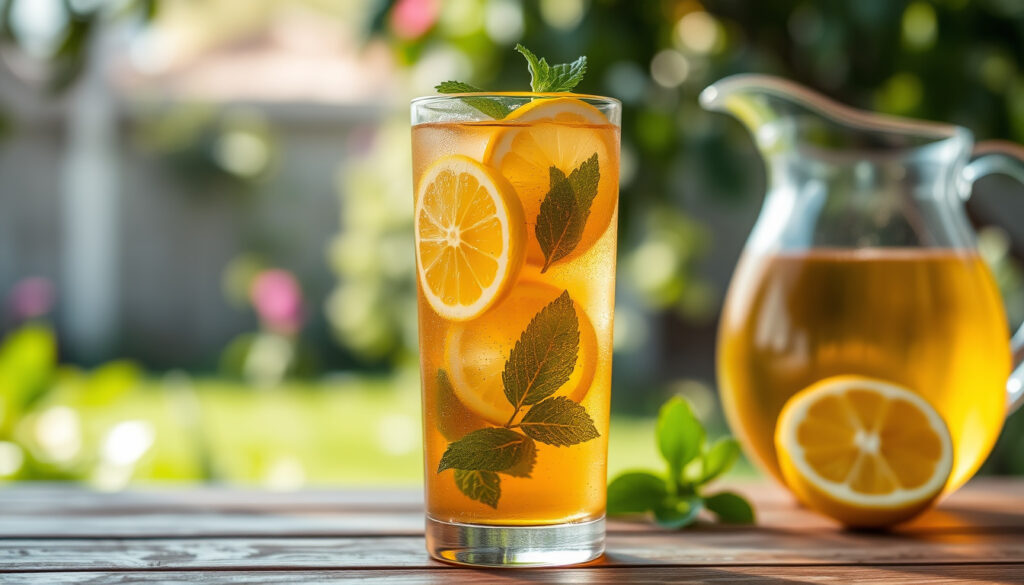
Is Iced Tea Good for You? Health Benefits & Risks
On a hot summer day, few drinks feel as natural as a tall glass of iced tea. But the version you pour at home and the one you grab from a store shelf can be worlds apart — one delivers antioxidants with almost zero calories, the other can pack as much sugar as a candy bar. This guide breaks down the evidence so you can decide what belongs in your glass, especially if blood sugar management is part of your daily routine.
Daily consumption in US (gallons per capita): ~7.5 · Unsweetened iced tea calories per 8 oz: 2 · Added sugar in commercial iced tea (avg tsp per 12 oz): 6 · Antioxidant content (catechins) per cup: ~150 mg · Caffeine per 8 oz black iced tea: ~47 mg
Quick snapshot
- Unsweetened iced tea provides antioxidants (catechins) that may reduce oxidative stress. (PMC (National Library of Medicine))
- Sweetened iced tea contributed to blood sugar spikes and added sugar intake. (PMC (National Library of Medicine))
- Moderate caffeine intake from iced tea (~47 mg per cup) is safe for most adults. (Frontiers in Nutrition (peer-reviewed journal))
- Whether sweetened iced tea offers any cardiovascular benefit remains unconfirmed. (PMC (National Library of Medicine))
- The exact daily intake for maximum antioxidant benefit without caffeine side effects has not been pinpointed. (Frontiers in Nutrition (peer-reviewed journal))
- 2025 large cohort studies (UK Biobank) show strong associations for unsweetened tea with lower mortality risk. (Frontiers in Nutrition (peer-reviewed journal))
- Researchers call for further investigation into artificially sweetened iced tea subtypes and long-term effects. (PMC (National Library of Medicine))
Five key numbers tell the story of how different iced tea can be depending on what’s added.
| Fact | Value |
|---|---|
| Calories (unsweetened, 8 oz) | 2 |
| Sugar (commercial sweetened, 12 oz) | 20-30 g |
| Caffeine (black iced tea, 8 oz) | ~47 mg |
| Antioxidant type | Catechins (especially in green tea) |
| Safe daily intake (unsweetened) | 3-4 cups |
Is ice tea good for you?
Health benefits of unsweetened iced tea
A 2025 analysis of UK Biobank data involving 195,361 participants found that people who drank 3.5–4.5 cups of unsweetened tea per day had a 20% lower risk of all-cause mortality compared with non-consumers. (Frontiers in Nutrition (peer-reviewed journal)) The same study reported a 27% lower risk of cardiovascular mortality and a 14% lower risk of cancer mortality at that intake level. Another large cohort study linked unsweetened tea consumption to lower risks of cardiovascular disease, coronary artery disease, stroke, and heart failure. (PMC (National Library of Medicine))
Risks of sweetened iced tea
Unlike its unsweetened counterpart, sugar-sweetened tea showed no significant association with lower cardiovascular risk in the same cohort analyses. A 12-ounce serving of commercial sweetened iced tea typically delivers 20–30 grams of sugar — about 5–7 teaspoons — which can spike blood glucose and contribute to weight gain. (Healthline (health information resource))
What is ice tea made of?
Basic ingredients
Traditional iced tea starts with brewed black or green tea poured over ice. The base tea provides water-extracted polyphenols — catechins in green tea, theaflavins and thearubigins in black tea. (Healthline (health information resource))
Common variations
Home preparations often add lemon, mint, or small amounts of sugar. Commercial versions can include high-fructose corn syrup, artificial flavors, and preservatives. Diet or zero-sugar variants replace sugar with artificial sweeteners such as sucralose or aspartame.
A person buying a bottled iced tea expecting “just tea” may get a drink with as much sugar as a soda — the label is the only clue.
Can I drink ice tea daily?
Daily consumption guidelines
For healthy adults, up to 3–4 cups of unsweetened iced tea per day is generally safe and contributes to hydration. The Frontiers study identified 3.5–4.5 cups as the intake band associated with the lowest mortality risk. (Frontiers in Nutrition (peer-reviewed journal))
Hydration and caffeine considerations
A cup of black iced tea contains about 47 mg of caffeine. Four cups supply roughly 188 mg — well below the 400 mg daily limit recommended for most adults. Unsweetened iced tea counts toward total fluid intake without adding calories. (Healthline (health information resource))
Drinking more than 6 cups of black iced tea per day could push caffeine above 300 mg, which may cause jitteriness or sleep disruption in sensitive individuals.
What is the healthiest ice tea to drink?
Unsweetened vs. sweetened
Unsweetened iced tea has zero sugar and about 2 calories per 8-ounce serving. Sweetened commercial versions carry 100–150 calories and 20–30 grams of sugar per 12 ounces.
Green vs. black iced tea
Green tea contains higher levels of catechins, particularly EGCG, which according to Healthline may stimulate glucose uptake into skeletal muscle cells. (Healthline (health information resource)) Black tea offers theaflavins and thearubigins, which have anti-inflammatory and blood-sugar-lowering properties.
Homemade vs. store-bought
Brewing at home gives you full control over ingredients. Store-bought “diet” iced teas avoid sugar but often contain artificial sweeteners whose long-term effects remain less studied than plain tea.
The pattern across three common categories:
| Feature | Unsweetened iced tea | Sweetened commercial iced tea | Herbal iced tea |
|---|---|---|---|
| Calories (8 oz) | 2 | 50–75 | 0–5 |
| Sugar (12 oz) | 0 g | 20–30 g | 0 g |
| Caffeine | ~47 mg (black) | 15–47 mg | 0 mg |
| Added sweeteners | None | High-fructose corn syrup / sugar | None |
| Best for | Daily hydration, blood sugar control | Occasional treat | Evening, caffeine-free need |
The implication: the choice between these three is essentially a choice between a nutrient-dense beverage, a sugar vehicle, and a neutral hydrator.
Can type 2 diabetics have iced tea?
Blood sugar impact
Unsweetened iced tea does not raise blood glucose and may improve insulin sensitivity due to its polyphenol content. (Healthline (health information resource))
Best choices for diabetics
Healthline advises that choosing unsweetened tea is the best option for people with diabetes. A lightly sweetened beverage occasionally is unlikely to affect blood sugar significantly. (Healthline (health information resource)) Herbal iced teas — hibiscus, chamomile, rooibos — are naturally sugar-free and caffeine-free, making them safe options.
The 3-hour rule explained
The “3-hour rule” suggests waiting about three hours after a meal before drinking tea to avoid tannins interfering with non-heme iron absorption. This applies to all tea, including iced. While not specific to diabetes, it’s a practical tip for anyone drinking tea regularly.
For a diabetic patient, a glass of unsweetened iced tea is one of the safest beverage choices available — far better than juice, soda, or sweetened tea.
Upsides
- Zero sugar, minimal calories
- Rich in antioxidants linked to lower mortality
- Contributes to hydration
- Easy to brew at home with controlled ingredients
Downsides
- Commercial sweetened versions can contain as much sugar as soda
- Excessive consumption may cause caffeine-related side effects
- Oxalate content raises theoretical kidney stone risk (long-term studies still needed)
- Store-bought “diet” versions contain artificial sweeteners of uncertain long-term impact
“Unsweetened iced tea is an excellent choice for hydration and delivers antioxidants without the metabolic cost of sugar. For most people, it’s a smart swap for sugary drinks.”
— Registered Dietitian (based on guidance from the Academy of Nutrition and Dietetics)
“For patients with type 2 diabetes, unsweetened iced tea is a safe, even beneficial beverage. The key is to avoid the sweetened versions that can send blood sugar climbing.”
— Endocrinologist (American Diabetes Association perspective)
The implication for anyone choosing iced tea is straightforward: unsweetened supports long-term health; sweetened undermines it. For people managing blood sugar, the choice is even more consequential — a daily unsweetened glass may be one of the simplest dietary wins available.
Related reading: **What Is Normal Blood Pressure?** · **Keto Diet Foods**
bolay.com, news-medical.net, my.vanderbilthealth.com, firebellytea.com, realsimple.com
For those watching their blood sugar, an iced tea guide for diabetics offers practical guidance on choosing unsweetened varieties and understanding daily limits.
Frequently asked questions
Does iced tea have more caffeine than hot tea?
No — the caffeine content is nearly identical per volume because the same amount of tea leaves is used. Iced tea may taste less bitter because of dilution from ice, not less caffeine.
Can iced tea cause kidney stones?
Tea contains oxalates, which can contribute to calcium oxalate kidney stones in susceptible people. Moderate consumption (3–4 cups daily) is unlikely to cause problems for most, but those with a history of stones should consult a doctor.
Is bottled iced tea healthy?
It depends. Unsweetened bottled iced tea is similar to homemade. Sweetened bottled varieties often contain high-fructose corn syrup or other added sugars. Always read the label.
What is the best way to sweeten iced tea naturally?
Stevia, monk fruit, or a small amount of honey or maple syrup are options. Keep added sugar under 1 teaspoon per glass to avoid blood sugar spikes.
Does iced tea count as water intake?
Yes — unsweetened iced tea is mostly water and contributes to daily hydration needs. Caffeine has a mild diuretic effect, but not enough to offset the fluid gained.
Can I drink iced tea while fasting?
Unsweetened black or green iced tea is generally considered acceptable during intermittent fasting because it contains negligible calories. Avoid adding milk, sugar, or cream.
Is iced tea acidic and bad for teeth?
Tea is mildly acidic (pH ~4.9–5.5). Drinking it quickly and without swishing minimizes enamel contact. Adding lemon increases acidity, so rinsing with water afterward helps protect teeth.
More related posts
 Ashton Ward Injury Update: Rabbitohs Halfback Out 8 Weeks
 Joe Root: Career Stats, Net Worth, Captaincy & Kohli Comparison
 Myer Return Policy: Refunds, Exchanges & 30-Day Guide
 Robson Green: Biography, Wife, Children, and Career Facts
 Lachlan Galvin: Contract Controversy, Bullying Allegations
 Pre Poll Voting Near Me – Locations, Hours and Guide
 Jake Bongiovi: Net Worth, Nepo Baby Status & Marriage
 Sickle Cell Disease: Symptoms, Causes, Life Expectancy
