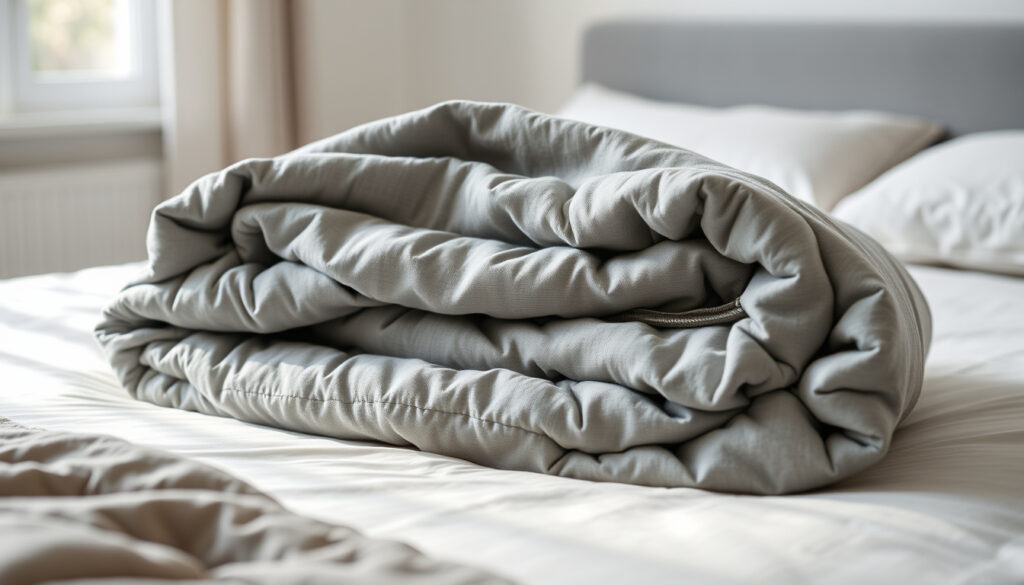
Weighted Blanket Guide: Benefits, Weight & Safety
Anyone who’s tossed and turned with anxiety knows the appeal of a simple, comforting pressure, which weighted blankets deliver via deep pressure stimulation. The Sleep Foundation notes they can reduce anxiety and improve sleep, and this guide breaks down the evidence, sizing rules, and what to watch for before buying in Ireland.
Recommended weight: 10% of body weight · Typical weight range: 2–25 kg (5–55 lbs) · Mechanism: Deep pressure stimulation (DPS) · NHS recommendation: Children with sensory processing issues
The following table summarises the key attributes of weighted blankets based on expert sources.
| Attribute | Detail | Source |
|---|---|---|
| Definition | Deep pressure stimulation to calm the nervous system | Sleep Foundation |
| Primary use | Reduce anxiety and improve sleep | Sleep Foundation |
| Weight rule | 10% of body weight | Michael Guineys (Irish retailer) |
| NHS guidance | Recommended for children with sensory processing issues | West Suffolk NHS Foundation Trust |
| Safety warning 1 | Never use for infants or toddlers | Sleep Foundation |
| Safety warning 2 | Consult doctor for asthma, low blood pressure, or circulatory issues | Sleep Foundation |
| Evidence status | RCOT states limited evidence for anxiety/sleep improvement | Royal College of Occupational Therapists |
| Child safety | Blanket ≤10% of child’s weight; child must remove it independently | Brown University Health |
What do weighted blankets actually do?
How deep pressure stimulation works
- Weighted blankets apply gentle, even pressure across the body, mimicking a therapeutic hold. This is called deep pressure stimulation (DPS). (Sleep Foundation)
- DPS is thought to activate the parasympathetic nervous system, lowering heart rate and cortisol levels. (Sleep Foundation)
- The exact mechanism is still under investigation, but the calming effect is widely reported. (Royal College of Occupational Therapists)
Effects on the nervous system
- DPS can reduce sympathetic nervous system activity (fight-or-flight). (Sleep Foundation)
- Users often report feeling more grounded and less anxious within minutes of use. (Sleep Foundation)
- For people with sensory processing disorders, the pressure can provide a regulating input. (West Suffolk NHS Foundation Trust)
Reported benefits for sleep and anxiety
Clinical studies show mixed but promising results. A 2020 study in children with autism found that weighted blankets improved sleep onset and reduced night wakings. (PubMed Central) Adult surveys consistently report reduced anxiety and better sleep quality. (Sleep Foundation) However, the Royal College of Occupational Therapists (UK’s professional body for occupational therapists) cautions that the evidence base is limited and not uniform.
Weighted blankets feel calming, but the research behind them is still catching up. The gap between anecdotal relief and scientific proof is where most buyer confusion lives.
The implication: Weighted blankets are a low-risk tool for many people, but they aren’t a guaranteed fix. The evidence is strongest for sleep and anxiety, yet the mechanism remains partly unknown.
Is it okay to sleep under a weighted blanket every night?
Recommended duration of use
- For most healthy adults, nightly use is safe as long as the blanket is the correct weight. (Sleep Foundation)
- There is no established maximum duration; users can sleep with it all night. (Sleep Foundation)
- If you feel claustrophobic or wake up with discomfort, reduce usage to shorter periods. (Brown University Health)
Safety considerations for adults and children
- Adults with obstructive sleep apnea should avoid weighted blankets because added chest pressure may restrict airflow. (Sleep Foundation)
- People with asthma, chronic respiratory issues, low blood pressure, or type 2 diabetes should consult a doctor first. (Sleep Foundation)
- For children, the blanket must not exceed 10% of the child’s body weight, and the child should be able to remove it independently. (Brown University Health)
Signs to stop using the blanket
- If you experience difficulty breathing, chest tightness, or numbness, discontinue use. (Sleep Foundation)
- Overheating or excessive sweating is a common complaint; switch to a lighter weight or breathable cover. (Sleep Foundation)
- If the blanket causes nightmares or a feeling of being trapped, stop using it nightly. (Brown University Health)
Nightly use is fine for most people, but the blanket must be correctly sized and the user must be able to move freely. The real risk isn’t the blanket itself—it’s the mismatch between weight and user.
Should I get a 6kg or 8kg weighted blanket?
How to calculate the ideal weight
The rule of thumb is 10% of your body weight. (Michael Guineys (Irish homeware retailer)) Some sources recommend a range of 8% to 12% for personal preference. (Baloo Living) For example:
- If you weigh 70 kg, a 7 kg blanket is ideal.
- If you weigh 60 kg, a 6 kg blanket suits you.
- If you weigh 90 kg, an 8 kg or 9 kg blanket is appropriate.
Weight options: 6kg vs 8kg for different body weights
Two common weights, compared:
| Blanket weight | Best for body weight range | Typical user | Price range (Ireland) |
|---|---|---|---|
| 6 kg | 60–80 kg | Average adult woman or smaller man | €50–€120 |
| 8 kg | 80–100 kg | Average adult man or larger person | €60–€150 |
| 20 lbs (9 kg) | 90 kg and above | Very large adults only | €70–€200 |
A 20-pound (9 kg) blanket is too heavy for anyone under 90 kg body weight. (Sleep Foundation)
Special considerations: 20 pounds (9 kg) and under
- 20 pounds is the maximum recommended weight for most adults; exceeding that can restrict movement and breathing. (Sleep Foundation)
- For children, never exceed 10% of body weight. A 20 kg child should use a 2 kg blanket, not 9 kg. (Brown University Health)
- If you are between sizes, choose the lighter option to avoid over-pressuring. (The English Home (UK consumer guide))
What this means: The 10% rule is your best safety guide. If you’re an Irish shopper looking at a 6 kg or 8 kg blanket, match it to your body weight—not to marketing claims.
Is it good to have a weighted blanket?
Benefits: anxiety, sleep, autism, ADHD
- Weighted blankets can reduce anxiety and improve sleep quality for many users. (Sleep Foundation)
- They are especially helpful for individuals with autism, ADHD, or chronic pain, including conditions like fibromyalgia. (West Suffolk NHS Foundation Trust)
- The deep pressure can help calm sensory overload and improve focus for people with ADHD. (Royal College of Occupational Therapists)
Who may benefit most
- People with anxiety disorders, insomnia, restless legs, or sensory processing difficulties often report the biggest improvements. (Sleep Foundation)
- Those with chronic pain conditions like fibromyalgia may find the pressure soothing. (Brown University Health)
- If you have ADHD, you might already know the calming effect of deep pressure—similar to the sensation in Loyle Carner’s account of his ADHD diagnosis. Weighted blankets can provide a similar regulatory input.
Potential downsides
- Not everyone benefits; some find weighted blankets too heavy, too warm, or restrictive. (Sleep Foundation)
- They can be difficult to clean (many require dry cleaning or spot cleaning). (Sleep Foundation)
- Quality weighted blankets cost between €50 and €200, which is a significant investment. (Michael Guineys)
The trade-off: Weighted blankets offer genuine relief for many, but they are not a universal solution. The key is matching the product to the user’s specific needs, body size, and health conditions.
What are the negatives of a weighted blanket?
Discomfort and overheating
- Many weighted blankets are filled with glass beads or plastic pellets, which can trap heat and cause night sweats. (Sleep Foundation)
- Some users find the pressure too intense, especially if the blanket is too heavy for their body weight. (Sleep Foundation)
- Restricted movement can be an issue for people who toss and turn during sleep. (Sleep Foundation)
Safety risks for vulnerable groups
- Weighted blankets should never be used on infants or toddlers due to suffocation and entrapment risk. (Sleep Foundation)
- Children under age two should not use them at all. (Brown University Health)
- People with respiratory conditions, circulatory issues, or low blood pressure should consult a doctor before use. (Sleep Foundation)
- The West Suffolk NHS Foundation Trust warns of a child death after being rolled in a weighted blanket and left unsupervised. (West Suffolk NHS Foundation Trust)
Cost and maintenance
- Quality weighted blankets range from €50 to €200, with premium brands costing more. (Michael Guineys)
- Many are not machine-washable; spot cleaning or professional dry cleaning is required. (Sleep Foundation)
- Removable covers add convenience but increase the initial cost. (Sleep Foundation)
Why this matters: The negatives are real but manageable. Overheating, safety risks, and cost can be mitigated with proper selection and usage. The real danger is buying without understanding the risks—especially for children and vulnerable adults.
Three common weight classes, one pattern: heavier blankets suit heavier people, but the 10% rule keeps everyone safe.
| Blanket weight | Ideal body weight range | Typical user | Price range (Ireland) | Safety note |
|---|---|---|---|---|
| 6 kg (13.2 lbs) | 60–80 kg | Average adult woman / smaller man | €50–€120 | Safe for most adults |
| 8 kg (17.6 lbs) | 80–100 kg | Average adult man / larger person | €60–€150 | Safe for most adults |
| 9 kg (20 lbs) | 90 kg and above | Very large adults only | €70–€200 | Too heavy for anyone under 90 kg |
Six key specifications that define a weighted blanket’s quality and suitability.
| Specification | Typical values | What to look for |
|---|---|---|
| Fill material | Glass beads, polyester pellets, plastic pellets | Glass beads are quieter and more evenly distributed |
| Cover fabric | Cotton, bamboo, microfiber, minky | Breathable cotton or bamboo for temperature regulation |
| Weight distribution | Evenly sewn channels or pockets | Look for “stitched pockets” to prevent fill shifting |
| Size | Single (120×200 cm), Double (150×200 cm), King (180×200 cm) | Should match your bed size; a double bed with a single blanket works |
| Washability | Cover: machine-washable; blanket: spot clean/dry clean | Removable cover is essential for easy cleaning |
| Weight range | 2–25 kg (5–55 lbs) | Most adults use 4–10 kg; children use 1–4 kg |
Upsides
- Reduces anxiety and stress (Sleep Foundation)
- Improves sleep quality for many users (Sleep Foundation)
- Helps with sensory processing disorders (West Suffolk NHS Foundation Trust)
- Non-invasive and drug-free option (Brown University Health)
Downsides
- Overheating and discomfort (Sleep Foundation)
- Safety risks for infants and people with medical conditions (Sleep Foundation)
- High cost (€50–€200) (Michael Guineys)
- Difficult to clean (Sleep Foundation)
Confirmed facts vs. what’s unclear
Confirmed facts
- Deep pressure stimulation calms the nervous system (Sleep Foundation)
- Weighted blankets improve sleep quality in many users (Sleep Foundation)
- They reduce anxiety in clinical settings (Sleep Foundation)
- Suffocation risk for infants and toddlers (West Suffolk NHS Foundation Trust)
What’s unclear
- Exact neurological mechanism of DPS (Royal College of Occupational Therapists)
- Long-term effects of nightly use (Royal College of Occupational Therapists)
- Individual response variability – why some people don’t benefit (Royal College of Occupational Therapists)
- Optimal weight for children with sensory processing issues (West Suffolk NHS Foundation Trust)
This breakdown helps readers separate established knowledge from areas still under investigation, guiding informed decisions.
What the experts say
“Weighted blankets can be used to help with sleep difficulties, anxiety, and sensory processing difficulties. However, the evidence base is limited and not all users will benefit.”
— Royal College of Occupational Therapists (UK professional body for OT)
“Weighted blankets can be a helpful tool for some children and young people with sensory processing difficulties. They should be used under the guidance of an occupational therapist.”
“The deep pressure provided by a weighted blanket can help calm the nervous system and improve sleep quality. But it’s important to choose the right weight and use it safely.”
“Our results suggest that weighted blankets may improve sleep quality and reduce anxiety, but more research is needed to confirm the effects in different populations.”
These expert perspectives underscore the importance of using weighted blankets as part of a broader approach, not as a standalone cure.
For Irish buyers, the choice is clear: a weighted blanket can be a worthwhile investment if you match the weight to your body (10% rule), buy from a reputable retailer like Dunnes, JYSK, or Emma Sleep, and heed the safety warnings—especially for children. Ignore the weight rule, and you risk discomfort, poor sleep, or worse. Use it correctly, and you may finally get the rest you’ve been chasing.
nosleeplessnights.com, advancedtherapyclinic.com, goodrx.com, skillbuildersaba.com
Frequently asked questions
Can weighted blankets help with anxiety?
Yes, many users report reduced anxiety from the deep pressure stimulation. The Sleep Foundation notes that weighted blankets can help lower cortisol levels and promote relaxation.
Are weighted blankets safe for children?
Weighted blankets can be safe for children over age two, provided the blanket weighs no more than 10% of the child’s body weight and the child can remove it independently. Never use them on infants or toddlers. (Brown University Health)
How do I wash a weighted blanket?
Most weighted blankets have a removable cover that can be machine-washed. The inner blanket often requires spot cleaning or professional dry cleaning. Always check the care label. (Sleep Foundation)
What is deep pressure stimulation?
Deep pressure stimulation (DPS) is a therapeutic technique that applies gentle, firm pressure to the body. It is thought to activate the parasympathetic nervous system, reducing heart rate and stress. Weighted blankets are a common tool for DPS. (Sleep Foundation)
Do weighted blankets work for ADHD?
Many people with ADHD report that the deep pressure helps calm sensory overload and improves focus. The Royal College of Occupational Therapists notes that weighted blankets can be used as part of sensory regulation strategies.
What size weighted blanket should I get?
Choose a blanket that matches your bed size (single, double, king) or your body size. A common approach is to buy a blanket that covers your body but not the entire bed, to keep the weight manageable. (Sleep Foundation)
Are weighted blankets covered by insurance?
In Ireland, weighted blankets are generally not covered by public health insurance (HSE). Some private health insurance plans may cover them if prescribed by an occupational therapist for sensory processing issues. Check with your provider. (West Suffolk NHS Foundation Trust)
These answers address common concerns, helping readers determine if a weighted blanket fits their situation.
Exploring these related articles can deepen your understanding of conditions that weighted blankets may help manage.
More related posts
 Aaron Paul Now: Career, Net Worth, and Current Projects
 Amber Heard: What Happened, Diagnosis, and Latest Updates
 iPad 11th Generation: Specs, Price, and Review (2025)
 Melbourne TV Guide: Compare Free-to-Air & Foxtel Listings
 Food Safety Supervisor: Role, Duties, Skills & Certification
 Bugs Bunny: Character Profile, Personality, and Cultural Impact
 Kim Philby: The Double Agent Who Betrayed MI6 – Full Story
 Pat Morita: Ethnicity, Death Cause, and Mr. Miyagi
