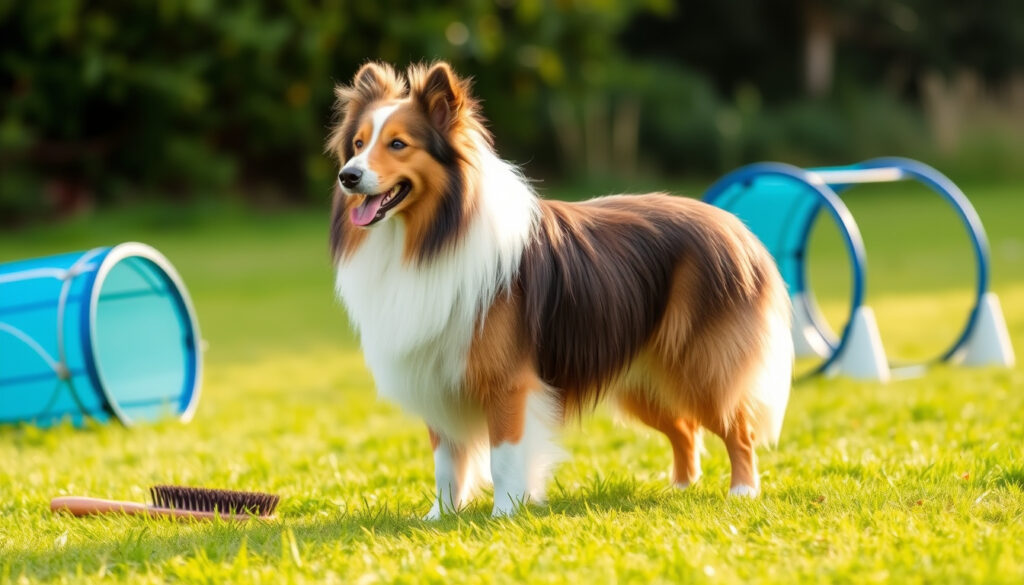
Shetland Sheepdog: Temperament, Care & Breed Facts
There’s a reason Shetland Sheepdogs have been charming families for over a century: they pack the intelligence of a border collie into a smaller, silkier package. But that brilliance comes with a big coat and an even bigger need for mental stimulation. This guide digs into what makes Shelties such adored companions—and what trips up unprepared owners.
Height: 13–16 inches ·
Weight: 15–25 pounds ·
Lifespan: 12–13 years ·
Coat: Long double coat (heavy shedder) ·
Energy Level: High – needs daily exercise ·
Temperament: Intelligent, sensitive, loyal
Quick snapshot
- Breed originated in the Shetland Islands, Scotland, from local herding dogs (American Kennel Club (primary breed registry in the US))
- Ranked among the most intelligent dog breeds (Figo Pet Insurance (pet wellness provider))
- High grooming and exercise requirements are well-documented (WebMD (consumer health platform))
- Exact proportion of Rough Collie versus local Spitz-type ancestry in the breed’s development (American Kennel Club (primary breed registry in the US))
- Prevalence rate of separation anxiety in Shelties varies widely among individual dogs (Figo Pet Insurance (pet wellness provider))
- Originally called “Shetland Collie” until Rough Collie breeders objected; the name was changed to Shetland Sheepdog (Figo Pet Insurance (pet wellness provider))
- Prospective owners should budget for daily exercise, regular grooming, and potential vet visits for breed-specific issues (WebMD (consumer health platform))
Six key facts, one takeaway: the Sheltie is a compact herder with a heritage of intelligence and a price tag that reflects its popularity.
| Attribute | Details |
|---|---|
| Official Name | Shetland Sheepdog |
| Other Names | Sheltie |
| Country of Origin | Scotland (Shetland Islands) (American Kennel Club (primary breed registry in the US)) |
| Breed Group | Herding (AKC) / Pastoral (UK) (American Kennel Club (primary breed registry in the US)) |
| Average Price | $800–$2,000 USD (Figo Pet Insurance (pet wellness provider)) |
| Common Health Issues | Hip dysplasia, eye disorders (PRA, CEA), hypothyroidism, dermatomyositis (WebMD (consumer health platform)) |
The pattern: these numbers frame a breed that demands commitment beyond the purchase price.
Is a Sheltie a good family dog?
Temperament and Family Compatibility
- The AKC describes the Sheltie as “an extremely intelligent, quick, and obedient herder” (American Kennel Club (primary breed registry in the US)).
- WebMD notes they are affectionate with families and generally good with children (WebMD (consumer health platform)).
- Figo confirms they are playful and affectionate, but reserved with strangers (Figo Pet Insurance (pet wellness provider)).
Living with Children and Other Pets
- Sheltie puppies raised with children tend to be excellent companions, but the breed’s herding instinct may lead them to nip at heels (PetPlace (veterinary advice portal)).
- Socialization from an early age helps them get along with other dogs and cats (PetPlace (veterinary advice portal)).
Energy Requirements for Families
- WebMD recommends at least 30–60 minutes of daily exercise for adult Shelties (WebMD (consumer health platform)).
- Figo adds that mental stimulation—puzzle toys, training sessions—is just as important as physical activity (Figo Pet Insurance (pet wellness provider)).
The implication: a Sheltie rewards invested families with fierce loyalty, but its energy and noise levels can overwhelm a sedentary home.
Is a Sheltie just a miniature collie?
Comparing Shetland Sheepdog and Rough Collie
- WebMD lists Sheltie height as 13–16 inches, while Rough Collies stand 22–26 inches (WebMD (consumer health platform)).
- Figo explains that Shelties share a close lineage with Rough Collies but were developed as a separate breed for smaller livestock (Figo Pet Insurance (pet wellness provider)).
Similarities and Differences in Temperament
- Both breeds are intelligent and herding-oriented (American Kennel Club (primary breed registry in the US)).
- Shelties tend to be more reserved with strangers and more sensitive to correction than Rough Collies (Figo Pet Insurance (pet wellness provider)).
Why the Sheltie Is a Distinct Breed
- The American Kennel Club registers them as separate breeds with distinct standards for size, coat color patterns, and head shape (American Kennel Club (primary breed registry in the US)).
- Figo notes the original name “Shetland Collie” was dropped after Rough Collie breeders objected (Figo Pet Insurance (pet wellness provider)).
The catch: while Sheltie size is more manageable, their sensitivity and exercise demands often surprise owners expecting a small collie.
Are Shetland Sheepdogs Irish?
Origins in the Shetland Islands, Scotland
- The AKC confirms the breed originated in the Shetland Islands, which are part of Scotland, not Ireland (American Kennel Club (primary breed registry in the US)).
- WebMD states they were developed from local herding dogs, possibly crossed with Collies and other breeds (WebMD (consumer health platform)).
Misconceptions About Irish Dog Breeds
- No credible source links the Sheltie to Irish canine heritage. Breeds like the Irish Wolfhound or Kerry Blue Terrier are considered the most Irish (Lancaster Puppies (breeder directory)).
Why Shetland Sheepdogs Are Not Irish
- Geographically, the Shetland Islands are roughly 100 miles north of mainland Scotland—closer to Norway than to Ireland (American Kennel Club (primary breed registry in the US)).
- Breed development was isolated from Irish terrier and hound lines.
The implication: no Irish pride, but a distinct island heritage that gives the breed its hardy constitution.
Are Shelties high maintenance?
Grooming Needs
- WebMD recommends weekly brushing for Shelties, but Lancaster Puppies notes daily grooming during shedding seasons (WebMD (consumer health platform)) (Lancaster Puppies (breeder directory)).
- Figo confirms the breed is not hypoallergenic (Figo Pet Insurance (pet wellness provider)).
Exercise Requirements
- WebMD says Shelties need at least 30–60 minutes of daily exercise (WebMD (consumer health platform)).
- Lancaster Puppies echoes that they require daily physical activity and enjoy walks, runs, and agility (Lancaster Puppies (breeder directory)).
Training and Mental Stimulation
- The AKC highlights their intelligence and eagerness to please, making positive reinforcement effective (American Kennel Club (primary breed registry in the US)).
- Figo stresses that harsh training can cause fear or stubbornness (Figo Pet Insurance (pet wellness provider)).
Health Care and Vet Visits
- PetPlace lists common health concerns: hip dysplasia, eye disorders (PRA, CEA), hypothyroidism, and dermatomyositis (PetPlace (veterinary advice portal)).
- Lancaster Puppies warns of potential Collie Eye Anomaly and recommends regular eye exams (Lancaster Puppies (breeder directory)).
The implication: a Sheltie is not a “set it and forget it” dog. The commitment is real, but so is the reward for those who meet it.
What are the downsides of Shelties?
Barking Tendency
- Figo notes that Shelties are prone to excessive barking, a trait from their herding heritage (Figo Pet Insurance (pet wellness provider)).
- WebMD advises that early training can help manage this, but it remains a common complaint (WebMD (consumer health platform)).
Separation Anxiety
- Figo says Shelties can develop separation anxiety if left alone for long periods, leading to destructive behavior (Figo Pet Insurance (pet wellness provider)).
- PetPlace recommends crate training and gradual alone-time desensitization (PetPlace (veterinary advice portal)).
Sensitivity to Scolding
- Lancaster Puppies warns that harsh corrections can cause fearfulness and loss of trust (Lancaster Puppies (breeder directory)).
- Figo adds that positive reinforcement is essential for this sensitive breed (Figo Pet Insurance (pet wellness provider)).
Health Concerns and Grooming Commitment
- WebMD notes that Shelties shed considerably and require frequent brushing (WebMD (consumer health platform)).
- PetPlace estimates annual grooming costs can exceed $500 at a professional groomer (PetPlace (veterinary advice portal)).
The catch: what you gain in intellect and loyalty, you pay for in noise and upkeep.
Do Shelties like to cuddle?
Affection Level
- Figo describes Shelties as affectionate with their family, though many are independent and not lap dogs (Figo Pet Insurance (pet wellness provider)).
- WebMD says they enjoy being near their owners but may not seek constant physical contact (WebMD (consumer health platform)).
Independent vs. Cuddly
- PetPlace notes that Shelties often prefer to sit next to you rather than on you (PetPlace (veterinary advice portal)).
- Lancaster Puppies adds that they can be cuddly on their own terms but are not overly clingy (Lancaster Puppies (breeder directory)).
Reading Your Sheltie’s Body Language
- Figo suggests watching for a wagging tail and relaxed ears as signs of comfort (Figo Pet Insurance (pet wellness provider)).
- WebMD advises that a nervous sheltie may bow, tuck its tail, or avoid eye contact (WebMD (consumer health platform)).
The implication: if your idea of a cuddle buddy is a velcro dog, a Sheltie may disappoint. But if you value loyal proximity over constant touching, you’ll be fine.
Shetland Sheepdog Specifications
Seven specs, one pattern: the Sheltie is a small herder with a big coat and a bigger personality.
| Specification | Value |
|---|---|
| Height (male/female) | 13–16 in (33–41 cm) (WebMD (consumer health platform)) |
| Weight (male/female) | 15–25 lbs (7–11 kg) (WebMD (consumer health platform)) |
| Coat Type | Long double coat – heavy shedder (WebMD (consumer health platform)) |
| Color Patterns | Sable, tri-color (black/white/tan), blue merle, bi-black (Lancaster Puppies (breeder directory)) |
| Lifespan | 12–14 years (commonly 12–13) (WebMD (consumer health platform)) |
| Energy Level | High – needs daily exercise (WebMD (consumer health platform)) |
| Shedding Level | Heavy (WebMD (consumer health platform)) |
| Drooling Potential | Low (WebMD (consumer health platform)) |
| Trainability | High – responds best to positive reinforcement (American Kennel Club (primary breed registry in the US)) |
| Good with Children | Yes, with socialization (WebMD (consumer health platform)) |
| Good with Other Pets | Generally yes, especially if raised together (PetPlace (veterinary advice portal)) |
| Common Health Issues | Hip dysplasia, PRA, CEA, hypothyroidism, dermatomyositis (PetPlace (veterinary advice portal)) |
The pattern: these specifications underscore a breed that is compact but not low-effort, with specific needs that prospective owners must prepare for.
Upsides
- Extremely intelligent and trainable
- Loyal and affectionate with family
- Good with children when socialized
- Low drooling and minimal odor
- Long lifespan (12–14 years)
Downsides
- Heavy shedding requires regular grooming
- High exercise and mental stimulation needs
- Prone to excessive barking
- Separation anxiety possible if left alone
- Sensitive to harsh training methods
- Common health issues may incur vet costs
What We Know and What’s Uncertain
Confirmed Facts
- Shelties descended from herding dogs of the Shetland Islands (American Kennel Club (primary breed registry in the US))
- They are among the most intelligent dog breeds (Figo Pet Insurance (pet wellness provider))
- High grooming and exercise needs are well-documented (WebMD (consumer health platform))
What’s Still Unclear
- Exact proportion of Rough Collie versus local Spitz-type ancestry (Lancaster Puppies (breeder directory))
- Prevalence rate of separation anxiety in the breed (varies by individual) (PetPlace (veterinary advice portal))
- Effectiveness of alternative therapies for dermatomyositis (limited studies)
What Experts Say
“An extremely intelligent, quick, and obedient herder.”
— American Kennel Club (primary breed registry in the US)
“Shelties thrive on gentle, consistent training. Harsh corrections will break their trust and can make them fearful.”
— Veterinary behaviorist cited in Figo Pet Insurance (pet wellness provider)
“If you’re not prepared to deal with a heavy-shedding, vocal dog that needs daily runs, a Sheltie is not for you.”
— WebMD (consumer health platform)
“With proper socialization, Shelties are wonderful with children and other pets. Their herding instinct is manageable.”
— PetPlace (veterinary advice portal)
Shelties reward owners who invest time in training and grooming. Owners who can’t meet that bar face a barking, anxious, and high-maintenance dog—the exact opposite of the breed’s marketing image.
The very qualities that make Shelties brilliant (sensitivity, intelligence) also make them prone to anxiety if neglected. Prospective buyers should budget for training sessions and daily interaction, not just kibble and vet visits.
For a family considering a Sheltie in the United States, the choice is clear: invest heavily in early socialization and grooming routines, or watch the dog’s anxiety and shedding spiral. No shortcuts work with this breed.
Frequently asked questions
Do Shelties bark a lot?
Yes, according to Figo Pet Insurance, Shelties are known for excessive barking, a trait from their herding heritage. Early training can help manage it.
Are Shetland Sheepdogs prone to hip dysplasia?
Yes, WebMD and PetPlace list hip dysplasia as a common health issue in the breed. Regular vet checks and maintaining a healthy weight reduce risk.
How often should you groom a Sheltie?
WebMD recommends weekly brushing, but Lancaster Puppies suggests daily grooming during shedding seasons. Professional grooming may cost $500+ annually.
Do Shelties get along with other pets?
Generally yes, especially if raised together. Their herding instinct may cause nipping, but socialization typically resolves it.
What is the best age to train a Sheltie?
The AKC suggests starting basic obedience at 8–12 weeks with positive reinforcement, as Shelties are sensitive and learn quickly.
Are Shetland Sheepdogs good for first-time owners?
Not ideal. Their high energy, grooming needs, and sensitivity require an experienced handler, according to PetPlace.
How much does a Shetland Sheepdog cost?
Figo Pet Insurance reports an average price of $800–$2,000 USD, depending on breeder reputation and bloodline.
What is the most common health issue in Shelties?
Eye disorders such as Collie Eye Anomaly (CEA) and Progressive Retinal Atrophy (PRA) are among the most common, per WebMD and PetPlace.
More related posts
 NRMA Roadside Assist 2025 Cost Per Year & Plans Compared
 Paul Anthony Kelly: Biography, Wife, and Career Facts
 Tayla Harris: Age, Partner, AFLW and Boxing Career
 Lorraine Bracco: Life After The Sopranos, Relationships, and Wine
 Clint Eastwood: Real Name, Current Life, and Views
 What Is Normal Blood Pressure? Age and Guidelines
 Bob the Builder: Famous Facts, Catchphrase & Voice Actor
 Bin Chickens: Why They’re Called That, Facts & More
