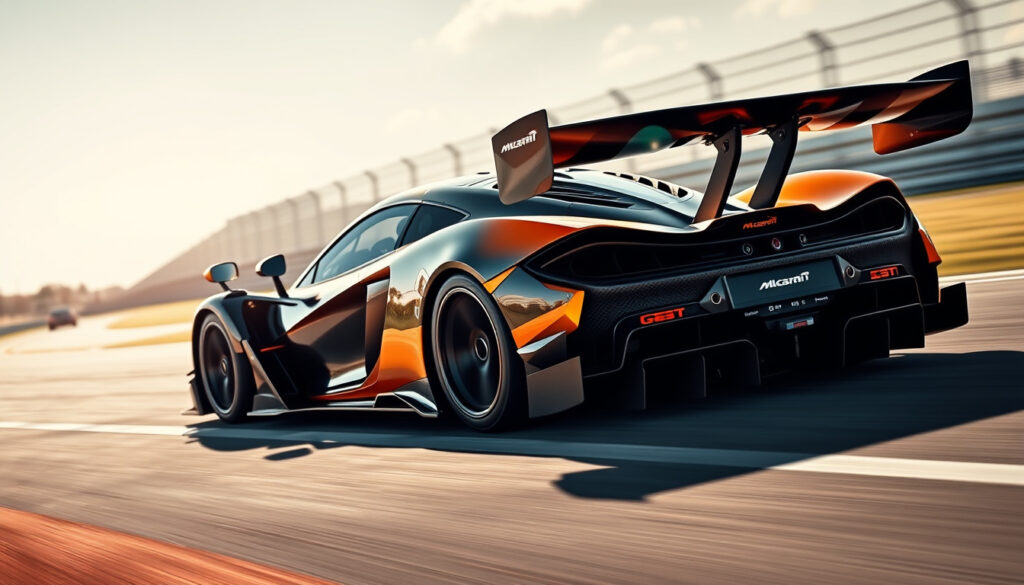
McLaren Senna GTR – Specs, Price and Performance Guide
The McLaren Senna GTR stands as one of the most extreme track-focused hypercars ever created by the British manufacturer. Built exclusively for circuit use and limited to just 75 examples worldwide, this machine represents the pinnacle of McLaren’s Ultimate Series philosophy—stripping away road-going necessities to deliver an uncompromised driving experience on tarmac.
Unveiled following the success of the road-legal Senna, the GTR variant emerged as a dedicated track weapon designed for owners who wanted the ultimate expression of McLaren engineering without the constraints of street legality. The project drew heavily from Formula 1 technology and the company’s GT3 racing program, resulting in a vehicle that generates staggering downforce figures while producing more power than its road counterpart.
This comprehensive guide examines the Senna GTR’s specifications, performance capabilities, pricing history, and how it compares to the standard road-legal Senna. Whether you’re a prospective buyer, a collector monitoring the market, or simply an enthusiast seeking detailed information, this article covers everything you need to know about this remarkable machine.
What Is the McLaren Senna GTR?
The McLaren Senna GTR is a track-only hypercar that sits above the already extreme Senna in McLaren’s Ultimate Series lineup. Announced in 2018 and entering production shortly thereafter, the GTR was designed from the outset as a purpose-built circuit machine that could deliver performance levels unattainable by any road-legal vehicle.
Unlike the standard Senna, which balances extreme performance with some consideration for road usability, the GTR abandons all pretense of street legality. This deliberate decision allowed McLaren’s engineers to remove sound deadening, road-going lighting systems, and compliance equipment, instead focusing entirely on aerodynamic efficiency, power output, and track-focused dynamics.
The GTR programme represented McLaren’s most ambitious non-F1 track car project to date. The company utilized technology and knowledge gained from both the Senna road car programme and its extensive GT3 racing activities to create something truly exceptional.
The Senna GTR was not designed to meet road regulations in any major market. Its aggressive aerodynamics, exposed design elements, and lack of essential road-going equipment—including compliant bumpers, mirrors, and full lighting systems—mean it cannot be registered for public highway use.
Key Insights
- The Senna GTR produces 25 more horsepower than the standard Senna, with its 4.0-litre twin-turbo V8 delivering 814-825 bhp
- Downforce reaches an extraordinary 1,000 kg at high speeds, a 25% increase over the road car’s 800 kg figure
- The dry weight of 1,188 kg makes the GTR 10 kg lighter than the standard Senna
- All 75 units sold out immediately upon their 2019 debut, demonstrating unprecedented demand
- The suspension system draws directly from the 720S GT3 racing programme, replacing the Senna’s adaptive road setup
- McLaren claims the GTR laps circuits “significantly faster” than GT3 competition cars
- Brake performance exceeds anything offered on the road Senna, with enhanced calipers and dedicated track pads
| Specification | Value |
|---|---|
| Engine | 4.0L Twin-Turbo V8 (M840TR) |
| Power Output | 814-825 bhp @ 7,250 rpm |
| Torque | 590 lb-ft (800 Nm) @ 5,500 rpm |
| Dry Weight | 1,188 kg (2,619 lbs) |
| 0-62 mph | 2.8 seconds (estimated) |
| Top Speed | 195 mph (estimated) |
| Transmission | 7-Speed Dual-Clutch, RWD |
| Downforce | Up to 1,000 kg |
McLaren Senna GTR Performance and Specs
The engineering philosophy behind the Senna GTR centers on a singular objective: maximum circuit performance. Every component, every material choice, and every system calibration serves this purpose. The result is a vehicle that, while derived from the Senna platform, represents a fundamentally different machine in practice.
Engine and Powertrain
Under the centre-hinged dihedral doors sits McLaren’s M840TR engine—a 3,994 cc twin-turbocharged V8 that represents the most powerful unit ever fitted to a track-focused McLaren at the time of its introduction. The power increase over the standard Senna comes primarily from modifications to the exhaust system, specifically the removal of the secondary catalytic converter, which reduces backpressure and allows the engine to breathe more freely.
Peak power arrives at 7,250 rpm, with maximum torque delivered at 5,500 rpm—figures that reflect a naturally aspirated-like powerband characteristic despite the twin-turbochargers. The 7-speed dual-clutch transmission delivers lightning-fast gear changes, routing all that power exclusively to the rear wheels through a mechanical limited-slip differential.
Aerodynamics and Handling
The aerodynamic package distinguishes the GTR from virtually every other road car in existence. The active rear wing operates in conjunction with a Drag Reduction System (DRS), while aggressive front splitters and dive planes generate the front-end downforce that contributes to the overall 1,000 kg figure achieved at speed. McLaren’s F1-derived knowledge underpins every surface treatment, every vent, and every Gurney flap.
The suspension setup abandons the Senna’s RoadActive Chassis Control II system entirely. Instead, the GTR employs a race-derived double-wishbone setup borrowed heavily from the 720S GT3 programme. This pure racing suspension offers superior track dynamics but renders the vehicle completely unsuitable for anything other than smooth circuits.
While the GTR generates approximately 200 kg more downforce than the road Senna, its top speed is actually lower due to the additional aerodynamic drag created by the track-focused aero package. This trade-off reflects the GTR’s primary purpose: cornering performance rather than outright straight-line speed.
Braking and Driver Feedback
Brake performance receives particular attention in the GTR specification. The enhanced carbon ceramic discs and calipers sourced from the Senna’s already impressive setup benefit from revised pad compounds and an uprated brake booster. Early driver impressions suggest these brakes represent “way above and beyond” what the standard Senna offers.
The feedback loop between driver and machine proves exceptionally communicative. Despite producing nearly 1,000 kg of aerodynamic load at speed, the GTR remains approachable for drivers of varying skill levels. Reviews from experienced track drivers consistently praise the car’s accessibility, noting that throttle response feels “above the normal Senna” and that the vehicle could readily handle additional power on circuits such as Bahrain.
McLaren Senna GTR Price and Availability
When new, the McLaren Senna GTR carried a base price of approximately £1.1 million before taxes, local duties, and destination charges. For buyers in the United States, this translated to roughly $1.65-1.7 million at current exchange rates. All 75 units allocated for production sold out immediately upon their public debut, matching the demand seen for the road-legal Senna before it.
Original Purchase Considerations
The purchase process for prospective GTR owners differed from standard McLaren transactions. Interested parties were required to place a significant deposit and commit to the vehicle’s track-only nature before allocation was confirmed. McLaren positioned the GTR programme as an exclusive ownership experience that extended beyond the vehicle itself, including support services and track day access for a curated owner community.
Current Market Values
As production ceased and all units entered private ownership, the Senna GTR has appreciated substantially on the secondary market. According to automotive journalists, residual values consistently exceed the original purchase price by a significant margin. Some sources indicate premiums of £500,000 or more above the standard Senna road car’s value for well-maintained GTR examples.
Specific auction results and authenticated private sales from 2024 remain limited in available records, though dealer listings from established McLaren retailers indicate continued strong demand. Given the extreme rarity—only 75 units versus 500 for the standard Senna—the used market remains extremely thin, with transactions occurring infrequently.
Industry analysts anticipate that as the years progress and these vehicles age, values will continue climbing among serious collectors and track enthusiasts. The combination of finite production, uncompromising performance, and the Senna name’s legendary status in automotive history supports this outlook.
Precise current market prices for Senna GTR units remain difficult to establish due to the small number of transactions and the private nature of many sales. Prospective buyers should expect values well above the original £1.1M asking price and prepare for a market where sellers hold considerable pricing power.
McLaren Senna GTR vs McLaren Senna
Understanding the distinction between the Senna GTR and its road-legal counterpart requires examining several key parameters. While sharing the Senna name and fundamental design language, these vehicles serve fundamentally different purposes and represent different engineering philosophies.
Street Legal versus Track-Only
The most obvious difference lies in legal classification. The standard McLaren Senna complies with road regulations in most major markets, meaning it can be registered, insured, and driven on public highways worldwide. The Senna GTR, by contrast, was never designed to meet these requirements and cannot be legally operated on public roads in virtually any jurisdiction.
This fundamental distinction affects everything from the lighting systems to the presence of essential safety equipment. The GTR’s aggressive aero elements extend beyond road-legal dimensions, and its exhaust note—which meets track noise limits but not street noise standards—would render it non-compliant with virtually any road vehicle regulation.
Performance Comparison
In raw power terms, the GTR delivers 814-825 bhp compared to the Senna’s 789-800 bhp—a meaningful increase of approximately 25 horsepower. This gain stems from the exhaust modifications and associated engine tuning that became possible without the constraints of road emissions compliance.
Weight reduction contributes significantly to the GTR’s track superiority. The dry weight of 1,188 kg represents a 10 kg advantage over the standard Senna. Combined with the dramatic downforce increase from 800 kg to 1,000 kg, the GTR offers cornering performance that the road car cannot approach regardless of driver skill.
| Aspect | Senna (Road-Legal) | Senna GTR (Track-Only) |
|---|---|---|
| Power | 789-800 bhp | 814-825 bhp |
| Dry Weight | 1,198 kg | 1,188 kg |
| Downforce | 800 kg @ 155 mph | 1,000 kg |
| Top Speed | 208 mph | 195 mph (est.) |
| Production | 500 units | 75 units |
| Legality | Street-legal worldwide | Track-only, no road use |
Ownership Context
The ownership experience differs substantially between these vehicles. Senna owners can use their cars daily, on weekends, or whenever the mood strikes. GTR owners must transport their vehicles to suitable circuits—a logistics challenge that adds to the overall cost of track-focused ownership but also contributes to the exclusivity.
Most Senna GTR buyers likely also own road-legal vehicles, including possibly the standard Senna. This combination allows owners to experience McLaren’s Ultimate Series philosophy in its road and track expressions, each offering distinct pleasures and challenges.
McLaren Senna GTR Production Timeline
The Senna GTR programme followed a compressed development schedule that reflected McLaren’s engineering capabilities and the urgency of demand from its customer base.
- 2018 – McLaren officially announces the Senna GTR programme, confirming a limited production run and track-only specification
- 2019 – All 75 units allocated and sold; production preparations commence at the McLaren Production Centre in Woking
- 2020 – First customer deliveries begin; the global pandemic affects some delivery timelines but the programme proceeds
- 2021-2022 – GTR units appear at exclusive track events and owner gatherings worldwide
- 2023 – Secondary market activity intensifies as early resale peaks emerge among collector interest
- 2024 onwards – Values stabilise at elevated levels as the collector market matures
The production timeline proved remarkably consistent despite initial concerns about supply chain disruptions. McLaren’s Formula 1 heritage and racing experience contributed to efficient programme management, resulting in all units reaching customers within the expected timeframe.
Established Facts and Areas of Uncertainty
When evaluating information about the Senna GTR, distinguishing confirmed details from speculation proves essential for prospective buyers and enthusiasts alike.
What We Know for Certain
- Production was limited strictly to 75 units, with no additional builds planned
- The vehicle is not road-legal and cannot be registered for highway use in any major market
- Engine displacement is 3,994 cc with twin-turbocharging producing 814-825 bhp
- The suspension derives directly from the 720S GT3 racing programme
- Original base pricing was approximately £1.1 million or $1.65-1.7 million
- Downforce reaches 1,000 kg at high speeds via active aerodynamics
- The vehicle features a 7-speed dual-clutch transmission driving the rear wheels only
Information That Remains Unclear
- Precise lap time achievements at specific circuits remain unpublished by McLaren
- Official 2024 auction results and authenticated private sale prices are not publicly documented
- The existence of any future GTR variants or derivatives has not been confirmed
- Long-term reliability data spans a relatively short ownership period
- McLaren has not disclosed specific details about individual customer modifications
- Service and maintenance costs for high-mileage track use remain unpublicised
The Senna GTR in McLaren’s Lineup Context
The Senna GTR occupies a unique position within the broader automotive landscape. It belongs to a diminishing category of vehicles that prioritises track performance above all other considerations, including those that have become standard expectations for even extreme road cars.
In McLaren’s history, the GTR represents the logical evolution of the Ultimate Series philosophy that began with the P1. Each successive vehicle in this lineage has pushed further toward pure circuit focus, with the GTR standing as the most extreme expression to date. The programme also demonstrates McLaren’s commitment to its most loyal and affluent customers, offering an experience that transcends ordinary vehicle ownership.
The hypercar market context matters considerably when evaluating the GTR’s significance. Competing vehicles from Ferrari, Porsche, and Aston Martin have followed similar paths, but few have committed so completely to the track-only formula. The GTR’s closest conceptual rival—the Porsche 919 Hybrid Evo—similarly abandoned road legality for circuit performance, though that vehicle remained a single experimental project rather than a customer product.
“The Senna GTR isn’t a car you drive—it’s a car that rewrites your understanding of what a road-legal chassis can achieve on track.”
This sentiment, echoed across multiple automotive publications, captures the GTR’s essential character. It represents not merely a vehicle but a statement about engineering possibilities when constraints are removed entirely.
Where to Find Additional Information
For readers seeking more detail on specific aspects of Senna GTR ownership, maintenance, or market analysis, several resources provide authoritative information. The Car Registration NSW – Full 2024 Guide to Costs Renewal offers useful context for Australian buyers navigating registration requirements for imported vehicles.
Those researching dealership experiences and consumer protections may benefit from reviewing the Cheap Car Co – Dealers, Complaints and Buyer Guide, which addresses common concerns when purchasing high-value vehicles through independent channels.
Official McLaren communications and dealership networks remain the primary authoritative source for original purchase information and authorised service requirements. Authorised McLaren retailers can provide documentation regarding specific vehicle histories and any applicable warranties.
Summary
The McLaren Senna GTR represents an extraordinary achievement in automotive engineering—a vehicle that prioritises track performance above all other considerations. With 814-825 bhp from its twin-turbo V8, up to 1,000 kg of downforce, and a dry weight of just 1,188 kg, the GTR delivers performance figures that challenge purpose-built racing machines.
Limited to 75 units and priced originally at approximately £1.1 million or $1.65-1.7 million, the GTR sold out instantly and has since appreciated substantially on the used market. Its suspension borrowed from GT3 racing, enhanced brakes, and track-focused aerodynamics distinguish it clearly from the already extreme road-legal Senna.
For qualified buyers seeking the absolute pinnacle of McLaren’s road-car engineering capability—unconstrained by road regulations—the Senna GTR offers an unmatched combination of exclusivity, performance, and engineering sophistication.
Frequently Asked Questions
What is the McLaren Senna GTR?
The McLaren Senna GTR is a track-only hypercar produced in limited numbers for exclusive circuit use. It features a 4.0-litre twin-turbo V8 engine producing 814-825 bhp and generates up to 1,000 kg of downforce.
How many McLaren Senna GTRs were made?
Only 75 units of the Senna GTR were produced. All examples sold immediately upon their 2019 debut, and no additional production has occurred since.
Is the McLaren Senna GTR street legal?
No, the Senna GTR is not street legal and cannot be registered for road use in any major market. It was designed exclusively for track driving and lacks the equipment required for road compliance.
What is the top speed of the McLaren Senna GTR?
The estimated top speed is 195 mph (approximately 315 km/h). This figure is lower than the road Senna due to the additional aerodynamic drag from the track-focused aero package.
How much does a McLaren Senna GTR cost?
Original base pricing was approximately £1.1 million or $1.65-1.7 million before taxes and delivery charges. Used market values now exceed the original asking price substantially.
What engine does the McLaren Senna GTR use?
The GTR utilises McLaren’s M840TR 3,994 cc twin-turbocharged V8 engine, producing 814-825 bhp at 7,250 rpm and 590 lb-ft of torque at 5,500 rpm.
How does the Senna GTR differ from the standard Senna?
The GTR produces more power, weighs 10 kg less, generates significantly more downforce, and uses GT3-derived suspension. Unlike the road-legal Senna, the GTR cannot be driven on public roads.
Where can I buy a McLaren Senna GTR today?
Due to extreme rarity, available units appear infrequently through authorised McLaren dealerships, specialist exotic car dealers, and occasionally at high-end auction houses. Current market values significantly exceed original pricing.
More related posts
 Sydney to Bangkok – Flight Times Costs and Tips
 Keto Diet Foods: Complete Guide to What to Eat and Avoid
 Daisy May Cooper: Third Child, Divorce, Sobriety & ADHD
 Cane Corso: Temperament, Care, and Aggression Risks
 Gong Yoo: Relationship, Marriage & Kids in 2025
 Bee Gees Songs: Top 10 Hits, Biggest Chart Successes
 Why Nala Ray Quit OnlyFans? Full Story
 John Daly: Career, Health & Controversies in 2025
