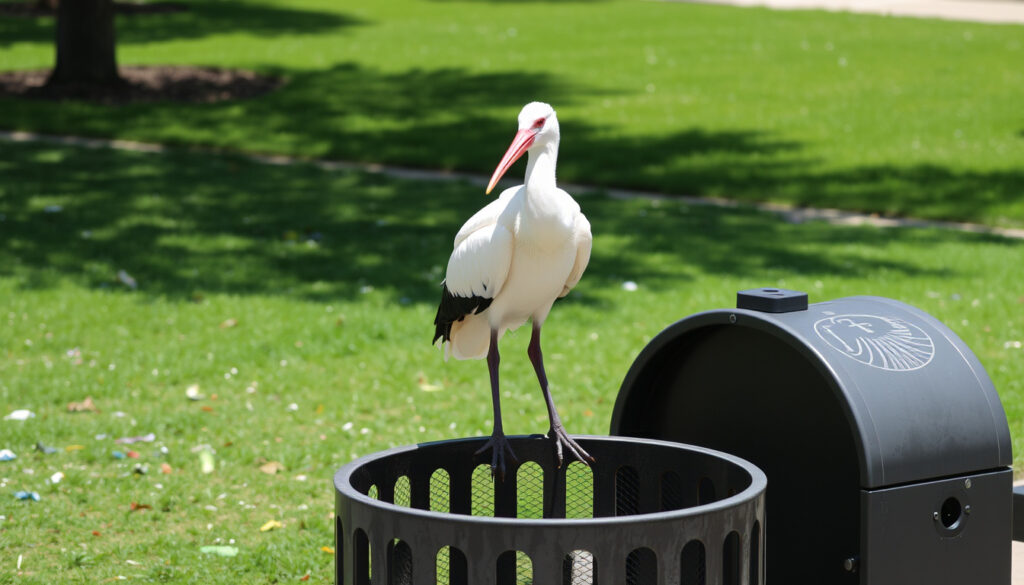
Bin Chickens: Why They’re Called That, Facts & More
Few Australian birds divide public opinion quite like the bin chicken. Half of the country laughs at its scavenging antics; the other half wishes the long-beaked visitor would stay away from the picnic table. But behind the memes and the messy bins lies a species that has pulled off one of the most rapid urban adaptations in modern ornithology.
Scientific name: Threskiornis molucca ·
Common nickname: Bin chicken ·
Native range: Eastern, northern, southwestern Australia; southern Indonesia, Papua New Guinea ·
Wingspan: Approximately 100 cm ·
Conservation status: Least Concern (IUCN) ·
Legal protection (Australia): Protected under state wildlife acts (e.g., NSW National Parks and Wildlife Act)
Quick snapshot
- The Australian white ibis is the species called bin chicken (Australian Museum (natural history museum)).
- It is native to Australia, Indonesia and Papua New Guinea (Australian Museum).
- It is protected under Australian wildlife laws in Queensland, New South Wales and Victoria (Wikipedia (community-sourced encyclopaedia)).
- Its urban scavenging behaviour is well documented since the 1970s (Wikipedia).
- Exact reasons for rapid urban colonisation since the 1970s (Wikipedia).
- Precise population numbers in urban vs natural habitats (Australian Museum).
- Long-term health effects of a human-provided diet on individual birds (ReWild Perth (urban ecology programme)).
- Late 1970s: Birds first appear regularly in urban centres on Australia’s east coast (Wikipedia).
- Recent decades: Range expands into Perth and south‑western Australia (ReWild Perth).
- Current: Species is widespread in all but the driest habitats (Australian Museum).
- Likely continued urban expansion as wetlands shrink (Australian Museum).
- Management programs may increase but lethal control remains restricted (Wikipedia).
- Public debate over feeding and coexistence will intensify in growing cities (ReWild Perth).
The Australian white ibis, Threskiornis molucca, is a medium‑sized wading bird that has rewritten its own habitat rules. The table below compacts the key facts.
| Attribute | Value |
|---|---|
| Scientific name | Threskiornis molucca |
| Common names | Bin chicken, Australian white ibis, tip turkey |
| Size | 65–76 cm in length |
| Wingspan | 100–120 cm |
| Weight | 1.2–2.1 kg |
| Lifespan | Up to 28 years in captivity |
| Diet | Insects, crustaceans, small vertebrates, human food scraps |
| Conservation status | Least Concern (IUCN); protected in Australia |
The implication: the ibis is physically equipped for wetland life, yet its behaviour has outpaced its anatomy.
Why are they called bin chickens?
Origin of the nickname
The name “bin chicken” is brutally descriptive: the bird’s habit of tipping over garbage bins and rummaging through waste in search of food earned it the moniker. According to the Australian Museum (natural history museum), the species has learned to exploit artificial food sources in urban environments, making bins a reliable pantry. The nickname appears to have entered common Australian slang in the late 20th century, paralleling the birds’ move into cities.
Other colloquial names
- Tip turkey – a reference to landfill foraging.
- Dump chook – a blend of “dump” and “chook” (chicken).
- Trash bird – used dismissively in online forums.
Why they scavenge urban bins
Wetland loss is the primary driver. As Australia’s coastal swamps and lagoons were drained for agriculture and housing, ibises lost their natural feeding grounds. The ReWild Perth (urban ecology programme) notes that the birds now rely heavily on human food waste, especially in cities like Sydney, Brisbane and Perth. The shift from natural insectivore to opportunistic scavenger took less than two generations.
Urban expansion didn’t just push ibises out of wetlands – it created a new niche that the birds filled faster than any wildlife manager expected. The bin chicken is a case study in adaptation under pressure.
Bottom line: The nickname “bin chicken” is a direct result of the bird’s bin‑scavenging behaviour, driven by habitat loss. For urban Australians, the ibis is now as common as the magpie, but far more controversial.
What are bin chickens good for?
Ecological role as scavengers
ReWild Perth describes the Australian white ibis as “an excellent pest controller around the garden.” They consume insects, small vertebrates, and fallen fruit – and in urban areas they help break down organic waste that would otherwise rot in landfill. A single bin chicken can eat hundreds of grasshoppers and grubs per day.
Cultural and scientific significance
The bin chicken has become a symbol of urban wildlife resilience. A 2018 Guardian Cities article (editorial publication) called the species “a grotesque glory” and a “ragtag success story.” Ecologists study the ibis to understand how native species adapt to rapid urbanisation – a pressing question as cities expand globally.
Contribution to urban waste management
By consuming discarded food, ibises provide a free, low‑carbon waste‑reduction service. The Australian Museum notes that some populations have become so reliant on artificial food that they now “are becoming pests,” creating a delicate trade‑off between benefit and nuisance.
The same scavenging behaviour that makes bin chickens helpful waste processors also makes them unwelcome neighbours. For city councils, the bird is both a public‑relations headache and an ecological asset.
Bottom line: Bin chickens are nature’s recyclers, cutting urban organic waste while providing research data on adaptation. The challenge is managing the conflict between their pest‑like image and their real ecological contribution.
Are bin chickens protected?
Legal protection under state and federal laws
The Australian white ibis is a protected species under the Wikipedia (community‑sourced encyclopaedia) notes that it is listed as protected in Queensland, New South Wales and Victoria. The federal Environment Protection and Biodiversity Conservation Act does not currently list the ibis as threatened, but state laws such as the NSW National Parks and Wildlife Act 1974 make it illegal to harm or kill the bird without a specific licence.
Exemptions and management programs
Despite its protected status, some local councils obtain permits for non‑lethal management – egg pricking, nest removal, or relocation – to control populations in problem areas. The Australian Museum states that the species’ increasing abundance in urban settings has led to calls for more active management.
Penalties for harming bin chickens
In New South Wales, deliberately harming or killing a bin chicken can result in fines of up to $22,000 or imprisonment for up to six months under the National Parks and Wildlife Act. Similar penalties apply in Queensland and Victoria. The ReWild Perth guide advises the public to report any deliberate harm to the local wildlife authority.
Legal protection creates a bind: residents who dislike ibis behaviour cannot simply shoo them away with force, but councils are increasingly petitioning for more flexible management rules. The tension between conservation and comfort is likely to grow as bird numbers rise.
Bottom line: Protected status shields bin chickens from harm, but it also forces communities to negotiate coexistence with a bird that many find messy and intrusive.
What countries are bin chickens in?
Native range in Australia
The species is common and widespread in eastern, northern and south‑western Australia. The Australian Museum confirms that the ibis is absent from Tasmania but can be seen in all but the driest areas of the mainland. Populations have expanded into the South West and Perth region in recent years, according to ReWild Perth.
Populations in Indonesia and Papua New Guinea
The Australian white ibis also occurs naturally in southern New Guinea and parts of Indonesia. Wikipedia lists the species’ range as including the Moluccas and the Lesser Sunda Islands. However, the “bin chicken” phenomenon – heavy reliance on urban waste – is primarily documented in Australian cities.
Colonization of urban areas
The shift from wetland to suburb began in the late 1970s. Wikipedia (encyclopaedic source) notes that the species became “commonly seen in urban areas of Australia’s east coast from the late 1970s onward.” The pattern repeated in Perth from the 1990s. Today, Sydney’s Centennial Park and Brisbane’s South Bank are reliable places to see bin chickens.
For residents in Perth who check Perth Weather Now before heading out, the bin chicken is now a predictable sight. The species’ expanding range means that what was once a wetland specialist is now an everyday urban presence across a continent.
Bottom line: Bin chickens are found across eastern, northern, and southwestern Australia, plus Indonesia and Papua New Guinea, but their urban success story is most visible in Australian cities.
What can I feed bin chickens?
Safe foods for bin chickens
In the wild, ibises feed on insects, crustaceans and small vertebrates. The Australian Museum lists crayfish and mussels as favourite natural foods. If you choose to supplement their diet – and experts generally advise against it – small amounts of cat kibble, cooked rice, or diced fruit are closest to their natural intake.
Foods to avoid
- Bread – provides empty calories and can cause “angel wing” deformities in young birds.
- Processed meats – high salt and preservatives harm ibis kidneys.
- Large meat chunks – difficult to digest and attract pests.
General feeding guidelines
ReWild Perth strongly advises against any deliberate feeding. “Best to let them forage naturally,” the organisation states, because feeding creates dependence and health problems. The Australian Museum adds that human food scraps are already plentiful in bins, so additional feeding only accelerates the pest‑like behaviour that many residents complain about.
Confirmed facts
- Australian white ibis is the species called bin chicken.
- Native to Australia, Indonesia, Papua New Guinea.
- Protected under state wildlife laws (QLD, NSW, VIC).
- Urban scavenging documented since 1970s.
What’s unclear
- Exact causes of rapid urban colonisation.
- Population proportions in urban vs natural habitats.
- Long‑term health effects of human diet.
- Whether increased populations pose ecological risks (Wikipedia notes they “do not appear to carry ecological risks” – low‑confidence claim).
The Australian white ibis is a ‘grotesque glory’ – a ragtag success story of urban adaptation.
Some populations have learned to exploit artificial foods in urban environments and are becoming pests.
— Australian Museum (natural history museum)
Best to let them forage naturally; feeding can cause dependence and health issues.
— ReWild Perth (urban ecology programme)
For Australia Day 2025: Date, Traditions, Wildlife & Health Facts, the bin chicken is an emblem of the nation’s quirky wildlife. But its protected status and rapid urban spread raise an uncomfortable question: how far will we let adaptation go? The ibis is no longer just a bird – it’s a test case for coexistence in the urban century. For Australian residents, the choice is clear: secure bins and tolerate the messy scavenger, or risk a future where the only ibises left are the ones that know how to open a wheelie bin.
For those wanting detailed legal and conservation details, see our Australian white ibis protection guide covering habitat and protected status.
Frequently asked questions
Do bin chickens carry diseases?
Like any urban bird, ibises can carry salmonella and other bacteria, but the risk to humans is low if basic hygiene is observed. Australian Museum notes no specific disease outbreaks linked to bin chickens.
How long do bin chickens live?
Up to 28 years in captivity; in the wild, average lifespan is shorter due to road trauma and predation. ReWild Perth estimates 15–20 years for urban birds.
Can bin chickens hurt you?
They are generally non‑aggressive. Their long beaks can deliver a sharp jab if the bird feels cornered, but serious injuries are extremely rare. The Wikipedia entry describes them as “docile.”
Why are bin chickens considered pests?
Their scavenging messes up public spaces, and their droppings can damage infrastructure. The Australian Museum acknowledges that some populations have become a nuisance in parks and urban areas.
Are bin chickens only found in Australia?
No. The Australian white ibis also lives in southern New Guinea and parts of Indonesia. However, the “bin chicken” behaviour is most pronounced in Australian cities. Wikipedia confirms the broader range.
What is the scientific name of the bin chicken?
Threskiornis molucca. ReWild Perth provides the taxonomic details.
Do bin chickens migrate?
Some populations move seasonally between wetlands, but urban ibises tend to be resident year‑round. The Australian Museum notes local movements tied to food availability.
Can you keep a bin chicken as a pet?
No. They are protected wildlife, and keeping them without a licence is illegal in all Australian states. The Wikipedia page clarifies the legal status.
More related posts
 Trisha Paytas: Career, Controversies, Family, and Health
 TFT Patch Notes: Latest Updates and Schedule (2026)
 Bacchus Marsh Vet: Prices, Reviews & Consultation Fees
 Limp Bizkit Dublin 2025: 3Arena Concert Guide
 Steven Bradbury: The ‘Last Man Standing’ Olympic Gold Story
 Ashton Ward Injury Update: Rabbitohs Halfback Out 8 Weeks
 Hayden Panettiere: Child Star, Motherhood, Addiction, Recovery
 Dusty Springfield: Biography, Partners, Net Worth
