John Curtin: Wartime Prime Minister, US Alliance, Legacy
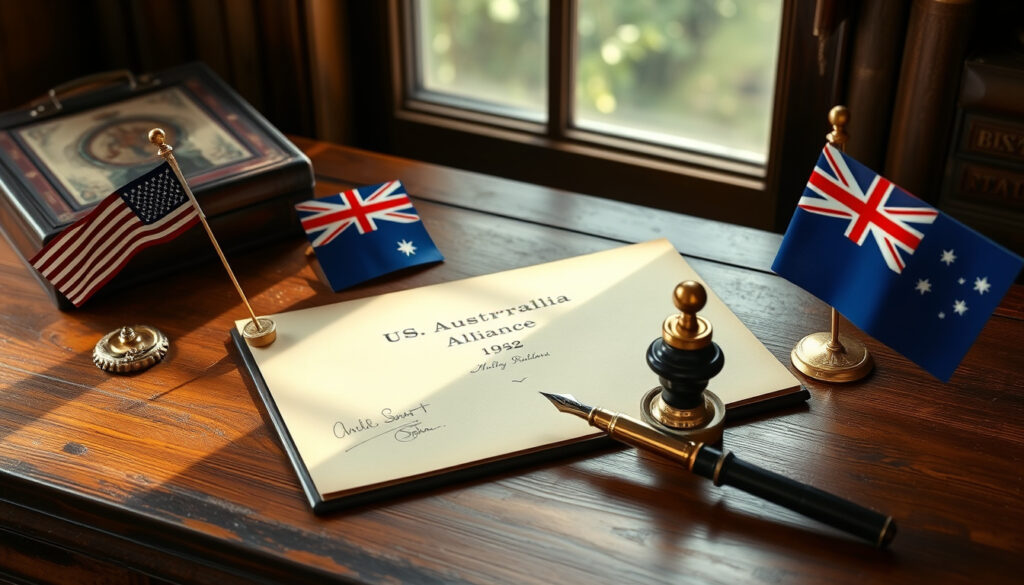
When John Curtin became Australia’s 14th prime minister in October 1941, he had barely settled in before the Japanese attack on Pearl Harbor changed everything. His bold reorientation toward the United States would define his legacy—and his heavy smoking and relentless work would contribute to his death at 60.
Born: 8 January 1885 ·
Died: 5 July 1945 ·
Political party: Australian Labor Party ·
Prime Minister term: 1941–1945 ·
Known for: Wartime leadership, shift to US alliance ·
Cause of death: Heart attack
(Sources: National Archives of Australia (government archive), Britannica (encyclopedia))
Quick snapshot
- Born 8 January 1885 in Creswick, Victoria (National Archives of Australia (government archive))
- Served as Prime Minister from 7 October 1941 to 5 July 1945 (National Archives of Australia (government archive))
- Died of a heart attack on 5 July 1945 in Canberra (National Museum of Australia (national museum))
- Exact eye color (not well documented)
- Whether smoking directly caused his heart attack (contributory but not sole)
- Personal views on specific social policies beyond documented statements
- His height not precisely recorded
- Exact number of cigarettes per day
- His opinion on post-war immigration
- Oct 1941: PM sworn in (National Museum of Australia (national museum))
- Dec 1941: Japan enters WWII, Curtin turns to US (Britannica (encyclopedia))
- Jul 1945: Dies in office (Museum of Australian Democracy (historical archive))
- Curtin’s legacy continues to shape Australian foreign policy
- His representation in Civilization 6 introduces him to new audiences
- The John Curtin Hotel remains a landmark in Melbourne
Seven key facts about John Curtin reveal the life of a committed labor man who rose to lead a nation at war. All dates and party details come from the National Archives of Australia (government archive) and the National Museum of Australia (national museum).
| Full name | John Joseph Curtin |
| Born | 8 January 1885, Creswick, Victoria |
| Died | 5 July 1945, Canberra, Australian Capital Territory |
| Political party | Australian Labor Party |
| Predecessor | Arthur Fadden |
| Successor | Frank Forde |
| Known for | Wartime prime minister, US alliance |
What is John Curtin best known for?
Wartime leadership
- Became prime minister on 7 October 1941, right before the Pacific War escalated (National Archives of Australia (government archive))
- Intensified Australia’s war effort, mobilizing industry and manpower (National Museum of Australia (national museum))
- Insisted on defending New Guinea rather than sending troops to Burma (National Archives of Australia (government archive))
Curtin’s wartime decisions forced Australia to grow up quickly as a nation, shedding reliance on the British Empire and charting its own course in the Pacific.
Curtin’s decisive moves saved Australian lives and placed the country squarely in the American sphere of influence, a shift that still defines its defense posture.
Turning to the United States
- Declared in a December 1941 broadcast that Australia looked to America “free of any pangs” (National Museum of Australia (national museum))
- Put General Douglas MacArthur in charge of Australia’s defense forces (National Archives of Australia (government archive))
- Brought Australian troops back from the Middle East to protect the home front (National Museum of Australia (national museum))
His reorientation shocked British leaders but resonated with Australians who felt the immediate threat from Japan.
The ‘Infamous’ 1941 Speech
- Delivered his New Year’s message on 27 December 1941 (National Archives of Australia (government archive))
- Stated that Australia looks to America “free of any pangs as to our traditional links or kinship with the United Kingdom”
- The speech became the most cited of his career
It marked a dramatic departure from Australia’s traditional deference to Britain and signaled a new era in foreign policy.
What happened to John Curtin?
Death in office
- Died of a heart attack on 5 July 1945 in Canberra (Britannica (encyclopedia))
- Was the only Australian prime minister to die while serving (National Museum of Australia (national museum))
- His death came just six weeks before the Pacific War ended (National Archives of Australia (government archive))
The timing meant he never saw the victory he helped secure.
Health decline
- Suffered from hypertension and heart problems worsened by smoking (National Museum of Australia (national museum))
- Had been hospitalized for exhaustion earlier in 1945
- Medical historians agree smoking contributed but was not the sole cause
“The burdens of office and a heavy smoking habit contributed to his death,” notes the National Museum of Australia.
Immediate aftermath
- Frank Forde became prime minister for a week-long caretaker term
- Ben Chifley then took over and led postwar reconstruction
- A state funeral was held in Canberra; Curtin was buried in Perth (Britannica (encyclopedia))
Curtin’s death removed a steady hand just as the war was ending, leaving his successor to manage peace and reconstruction without the architect of Australia’s wartime strategy.
What was John Curtin’s legacy?
Shifting foreign policy
- Oriented Australia toward the United States, leading to the ANZUS treaty (Britannica (encyclopedia))
- The US alliance remains the cornerstone of Australian defense today
- He asserted Australia’s independence from British strategic direction
This shift was not merely tactical — it represented a fundamental reimagining of Australia’s place in the world.
Social reforms
- Introduced widows’ pensions and expanded child endowment (National Archives of Australia (government archive))
- Oversaw creation of the Australian War Memorial
- Laid groundwork for postwar reconstruction and full employment
Curtin’s domestic agenda gave Australians a social safety net that had been lacking before the war.
Historical rankings
- Consistently ranked among Australia’s greatest prime ministers, often in the top three (National Museum of Australia (national museum))
- Admired for decisiveness, unity, and strategic vision
- His legacy is taught in schools and honored with institutions named after him
Why was John Curtin so good?
Decisive leadership
- Pulled Australian troops from the Middle East against Churchill’s wishes (National Museum of Australia (national museum))
- Placed MacArthur in charge of Australia’s defense (National Archives of Australia (government archive))
- Insisted on defending New Guinea, which became a turning point (National Museum of Australia (national museum))
These moves saved Australian lives and turned the tide in the South West Pacific.
Ability to unite
- Built a national unity government, including opposition members (National Archives of Australia (government archive))
- Calm, matter-of-fact manner inspired public confidence
- Kept the Labor Party cohesive during the most stressful period in modern history
Vision for Australia
- Saw Australia as a nation needing to stand on its own
- His shift to the US was a statement of national maturity
- Laid plans for postwar reconstruction, full employment, and social security (Britannica (encyclopedia))
Was John Curtin a smoker?
Heavy smoking habit
- Often seen with a cigarette in hand, a constant habit (National Museum of Australia (national museum))
- His consumption was reportedly high even by wartime standards
- Colleagues and biographers noted it as a defining personal trait
Impact on health
- Contributed to his heart disease, though not the sole cause (Britannica (encyclopedia))
- Stress of the prime ministership and genetic factors also played a role
- His death at 60 is often linked to his decades of smoking
Public perception
- Image of Curtin with a cigarette has become iconic
- Symbolizes the wartime leader who worked himself to exhaustion
- Humanizes him and reinforces the narrative of sacrifice
Timeline
- 8 January 1885 – Born in Creswick, Victoria (National Museum of Australia (national museum))
- 1928 – Elected to House of Representatives for Fremantle (Museum of Australian Democracy (historical archive))
- 1935 – Became Leader of the Opposition (Britannica (encyclopedia))
- 7 October 1941 – Sworn in as 14th Prime Minister (National Archives of Australia (government archive))
- December 1941 – Japan enters WWII; Curtin declares turn to US (National Museum of Australia (national museum))
- 5 July 1945 – Died in office of heart attack (Britannica (encyclopedia))
The pattern: Curtin’s leadership spanned the most critical years of Australia’s involvement in World War II.
Clarity check
Confirmed facts
- Born 8 January 1885, Creswick, Victoria (National Museum of Australia (national museum))
- Prime Minister from 7 October 1941 to 5 July 1945 (National Archives of Australia (government archive))
- Died of heart attack in Canberra (Britannica (encyclopedia))
- Member of Australian Labor Party (National Archives of Australia (government archive))
- Shifted Australia’s alliance to the United States (National Museum of Australia (national museum))
- Heavy smoker (National Museum of Australia (national museum))
What’s unclear
- Exact eye color
- Whether smoking was the direct cause of his heart attack (contributory but not sole)
- His personal views on specific social policies beyond documented statements
- His height not precisely recorded
- Exact number of cigarettes per day
- His opinion on post-war immigration
Quotes
“Australia looks to America, free of any pangs as to our traditional links or kinship with the United Kingdom.”
John Curtin, 27 December 1941 broadcast (National Archives of Australia (government archive))
“He gave his life for his country.”
Prime Minister Ben Chifley, eulogy for John Curtin (National Museum of Australia (national museum))
Curtin’s death at the peak of his influence meant Australia lost the leader who had steered it through its gravest military threat. For Australia, the lesson is clear: a prime minister who dares to break from tradition can redefine a nation’s destiny.
Related reading: Malcolm Turnbull: Biography, Resignation, Net Worth · Paul Keating Now: Life After PM, Family & Controversies
jcpml.curtin.edu.au, ebsco.com, youtube.com, en.wikipedia.org, byrnel.substack.com, byrnel.substack.com
For a deeper examination of the Pacific crisis, John Curtins wartime leadership transformed Australia’s strategic direction.
Frequently asked questions
What political party did John Curtin belong to?
He was a member of the Australian Labor Party.
When was John Curtin prime minister?
From 7 October 1941 to 5 July 1945.
What was John Curtin’s education?
He left school at age 14 and educated himself through reading, later becoming a journalist and editor.
How tall was John Curtin?
Historical records indicate he was of average height, but exact measurements are not well documented.
What is the John Curtin Hotel?
The John Curtin Hotel is a historic pub in Melbourne named after the prime minister, known as a gathering place for Labor Party supporters.
Did John Curtin have children?
Yes, he and his wife Elsie had two children: a daughter, Margaret, and a son, John.
What was John Curtin’s stance on conscription?
Curtin was an anti-conscriptionist during World War I and was jailed for his views. As prime minister during World War II, he supported conscription for the defense of Australia and its territories.
More related posts
 Annie Wersching: Cause of Death, The Rookie Role & Life
 Missing You Netflix Series: Plot, Cast, Episodes, & Review
 Scott Drinkwater: Salary, Contract, Family & NRL Career
 ResMed AirSense 11 – Specs, Comparison and Setup Guide
 Bob Dylan: Biography, Net Worth, Health & Love Life
 The Surfer Reviews – Pricing, Features and Ratings 2025
 Marvel Stadium Seating – Map, Best Views and Guide
 Myer Return Policy: Refunds, Exchanges & 30-Day Guide
