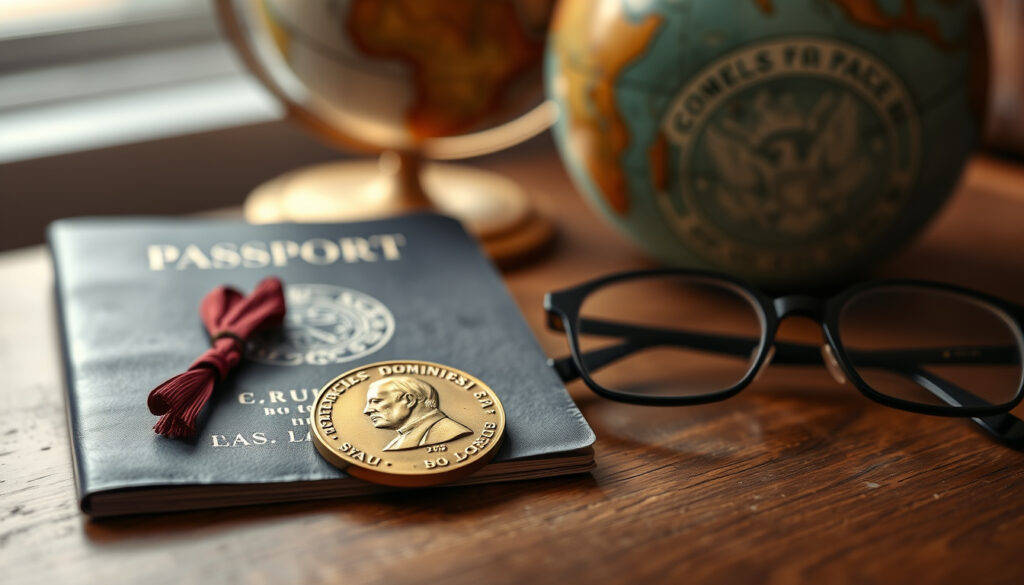
Henry Kissinger: Controversial Diplomat and Nobel Laureate
Henry Kissinger’s name appears in history books as both a Nobel Peace Prize winner and a figure accused of authorizing war crimes. That contrast isn’t an accident — it’s the core of a legacy that shaped global diplomacy for decades. This article cuts through the polarized takes to look at what he actually did, what he’s praised for, and what still divides opinion today.
Born: May 27, 1923 · Died: November 29, 2023 · Age at Death: 100 · Secretary of State: 1973–1977 · Nobel Peace Prize: 1973 · Books Authored: Over 15
Quick snapshot
- Born in Fürth, Germany in 1923; fled Nazis in 1938 (Encyclopaedia Britannica (reference publisher))
- Served as U.S. Secretary of State 1973–1977 (Henry A. Kissinger official site (authoritative biography))
- Awarded Nobel Peace Prize 1973 for Vietnam ceasefire (Biography.com (editorial biography))
- Died November 29, 2023 at age 100 (Encyclopaedia Britannica (reference publisher))
- Extent of direct involvement in war crimes decisions
- Whether his Cambodia policies legally constituted genocide
- Personal knowledge of covert operations during Nixon administration
- Level of responsibility for East Timor human rights abuses
- 1923–2023: From German refugee to global power broker
- 1971: Secret China visit reshaped Cold War map
- 1973: Nobel Peace Prize awarded amid ongoing war
- 1977: Left office, continued influencing policy
- Declassification of remaining Nixon-era records may clarify his role
- Scholars debate whether his realpolitik model still guides U.S. strategy
- Legacy remains a flashpoint in American foreign policy discourse
The facts below draw from official records, encyclopedic sources, and editorial biographies. One pattern emerges: a man whose achievements and accusations are equally well-documented.
| Attribute | Detail |
|---|---|
| Full Name | Henry Alfred Kissinger |
| Date of Birth | May 27, 1923 |
| Place of Birth | Fürth, Germany |
| Date of Death | November 29, 2023 |
| Nationality | American (naturalized 1943) |
| Education | Harvard University (B.A., M.A., Ph.D.) |
| Notable Positions | National Security Advisor, Secretary of State |
| Awards | Nobel Peace Prize (1973), Presidential Medal of Freedom (1977) |
What did Henry Kissinger do that was controversial?
Kissinger’s career is bookended by actions that critics argue violated international law. The most documented areas involve U.S.-led military campaigns in Southeast Asia, support for authoritarian regimes, and allegations of enabling mass civilian casualties.
Bombing of Cambodia and Laos
- In 1969–1970, Kissinger authorized secret bombing campaigns in Cambodia, expanding the Vietnam War into a neutral country (Encyclopaedia Britannica (reference publisher)).
- Critics say this campaign devastated Cambodia and helped the Khmer Rouge rise to power (Biography.com (editorial biography)).
- The bombing was kept secret from Congress and the American public for years.
Kissinger pursued a “peace with honor” strategy in Vietnam while authorizing operations that killed tens of thousands of civilians — a contradiction that defines his legacy.
Support for authoritarian regimes
- Kissinger is accused of backing the 1973 coup in Chile that installed Augusto Pinochet (Encyclopaedia Britannica (reference publisher)).
- He endorsed anti-democratic violence by right-wing governments in Latin America through inaction (Encyclopaedia Britannica (reference publisher)).
- His policies reportedly contributed to atrocities during the 1971 Bangladesh Liberation War and Indonesia’s 1975 invasion of East Timor (Encyclopaedia Britannica (reference publisher)).
Allegations of war crimes
- Multiple international legal experts have argued that the Cambodia bombing constituted a war crime under international law.
- Kissinger avoided prosecution, but the question of his legal responsibility remains open in academic discourse.
The catch: Kissinger’s defenders argue that each decision was made in the context of the Cold War. For the families of victims in Cambodia, Chile, and East Timor, that justification rings hollow.
What is Henry Kissinger most famous for?
For every controversial act, Kissinger has a diplomatic achievement that historians rank among the century’s most consequential. Three stand out.
Secretary of State under Nixon and Ford
- Kissinger served as National Security Advisor (1969–1975) and then Secretary of State (1973–1977), holding both roles simultaneously for a time (Henry A. Kissinger official site (authoritative biography)).
- He was the first person to hold both positions, giving him unmatched influence over U.S. foreign policy.
Pioneering détente with the Soviet Union
- Kissinger pursued a policy of “détente” to ease Cold War tensions with the USSR (Encyclopaedia Britannica (reference publisher)).
- He led the Strategic Arms Limitation Talks (SALT I), which produced the first treaty capping nuclear weapons (Encyclopaedia Britannica (reference publisher)).
Normalizing relations with China
- In July 1971, Kissinger made a secret trip to Beijing, laying the groundwork for Nixon’s historic 1972 visit (Encyclopaedia Britannica (reference publisher)).
- That trip ended two decades of U.S.-China isolation and reshaped global geopolitics.
Kissinger’s pragmatic realpolitik opened doors that ideology had kept locked — but the cost of that pragmatism, in human lives, is the central debate of his life.
The trade-off: Détente and the China opening reduced the risk of nuclear war. They also strengthened dictatorships. Kissinger chose stability over human rights.
Why did Kissinger win the Nobel Peace Prize?
The 1973 award was framed as a recognition of the Paris Peace Accords, which aimed to end U.S. involvement in Vietnam. Instead, it became one of the most disputed prizes in Nobel history.
1973 Paris Peace Accords
- On January 27, 1973, Kissinger and North Vietnamese negotiator Le Duc Tho signed the agreement (Biography.com (editorial biography)).
- The accords established a ceasefire, withdrew U.S. troops, and released prisoners of war.
Shared award with Le Duc Tho
- The Norwegian Nobel Committee awarded the prize jointly to Kissinger and Le Duc Tho.
- Le Duc Tho declined, citing that peace had not yet been achieved (Biography.com (editorial biography)).
- Kissinger accepted the prize alone, though he later considered returning it.
Subsequent controversy
- Two Nobel Committee members resigned in protest over the award.
- Fighting in Vietnam continued for two more years, making the prize appear premature.
- Kissinger’s overall record led many to question the Nobel’s criteria for peace.
The implication: The 1973 Nobel Peace Prize now serves less as a tribute to peacemaking and more as a symbol of how diplomacy can be divorced from outcomes on the ground.
What did Henry Kissinger do in WWII?
Before he became a diplomat, Kissinger served in the U.S. Army — a period that shaped his worldview and his later approach to power.
Service in the US Army
- Kissinger was drafted in 1943 and served until 1946 (Encyclopaedia Britannica (reference publisher)).
- He was assigned to the Counter Intelligence Corps, where his German language skills were crucial.
Combat intelligence role
- He participated in the liberation of a concentration camp and helped capture Gestapo officers (Encyclopaedia Britannica (reference publisher)).
- Witnessing the Holocaust’s aftermath firsthand instilled in him a lifelong skepticism of ideological fervor.
Liberation of concentration camps
- Kissinger was part of the U.S. forces that liberated the Ahlem concentration camp near Hanover.
- The experience convinced him that power must be wielded pragmatically to prevent such atrocities.
What this means: Kissinger’s WWII service is often cited by defenders as evidence of his firsthand understanding of evil. Critics counter that this makes his later support for authoritarian regimes all the more inexcusable.
Who is the only person to refuse the Nobel Peace Prize?
That distinction belongs to Le Duc Tho, the North Vietnamese diplomat who negotiated alongside Kissinger.
Le Duc Tho’s refusal
- Le Duc Tho rejected the 1973 Nobel Peace Prize, making him the only person to voluntarily decline the award (Biography.com (editorial biography)).
- He stated that peace had not yet been achieved and that honoring him under those conditions was inappropriate.
Reasons for declining
- Tho believed the Paris Accords did not guarantee a durable peace.
- He also likely anticipated criticism from his own government and from anti-war activists.
Impact on Kissinger’s award
- Kissinger accepted the prize alone, which intensified the criticism.
- Some speculate that the controversy contributed to Kissinger’s later reluctance to discuss the award.
The pattern: Le Duc Tho’s refusal highlights a deeper truth about the Vietnam War — that political agreements without genuine peace on the ground are fragile at best.
Timeline: Henry Kissinger’s life in key dates
- 1923 – Born in Fürth, Germany.
- 1938 – Fled Nazi Germany with family; settled in New York City (Encyclopaedia Britannica (reference publisher)).
- 1943–1946 – Served in U.S. Army Counter Intelligence Corps (Encyclopaedia Britannica (reference publisher)).
- 1950–1954 – Earned Ph.D. from Harvard; became professor.
- 1969 – Appointed National Security Advisor by President Nixon (Biography.com (editorial biography)).
- 1971 – Secret trip to China; laid groundwork for Nixon visit.
- 1973 – Became Secretary of State; awarded Nobel Peace Prize (Encyclopaedia Britannica (reference publisher)).
- 1973 – Secret bombing of Cambodia authorized.
- 1977 – Left office; founded Kissinger Associates consulting firm.
- 2023 – Died at age 100 in Kent, Connecticut (Encyclopaedia Britannica (reference publisher)).
What the timeline shows: Kissinger’s life spans the rise and fall of the Cold War. Each phase of his career is tied to a pivot point in global history — for better or worse.
Clarity: What we know and what remains disputed
Confirmed facts
- Kissinger was born in Germany and fled the Nazis.
- He served as Secretary of State under Nixon and Ford.
- He won the Nobel Peace Prize in 1973.
- He died in 2023 at age 100.
What’s unclear
- Extent of his direct involvement in war crimes decisions.
- Whether his policies legally constituted genocide in Cambodia.
- His personal knowledge of covert operations during the Nixon administration.
- Degree of responsibility for East Timor and Bangladesh atrocities.
Quotes: Kissinger on power, leadership, and history
“Power is the ultimate aphrodisiac.”
Henry Kissinger, attributed during an interview
“The great danger in the modern era is the breakdown of authority.”
Henry Kissinger, comment on international leadership
“Don’t be too ambitious. Do the most important thing you can think of doing every year and then your career will take care of itself.”
Henry Kissinger, from his book ‘World Order’
Why these matter: Kissinger’s own words reveal a man who saw power as a tool, authority as a necessity, and ambition as a discipline — a philosophy that explains both his successes and his moral blind spots.
Summary: Kissinger’s complicated inheritance
Henry Kissinger changed the world — that is not in dispute. What is in dispute is whether the changes were worth the cost. He opened China, cooled the Cold War, and won a Nobel Peace Prize. He also bombed neutral countries, supported dictators, and remains a symbol of unaccountable power. For anyone studying U.S. foreign policy, the choice is not to admire or condemn Kissinger, but to understand the trade-offs he embodied. The implication for policymakers: realpolitik wins influence but buys it with moral currency that eventually must be repaid.
Frequently asked questions
What was Henry Kissinger’s net worth at the time of his death?
Estimates put Kissinger’s net worth at around $30 million, largely from his consulting firm and book royalties.
How did Henry Kissinger die?
He died of natural causes at his home in Kent, Connecticut.
Was Henry Kissinger a war criminal?
Legal scholars are divided. No international tribunal has charged him, but many argue that the secret bombing of Cambodia violated international law.
Did Henry Kissinger have children?
Yes, he had two children — Elizabeth and David — with his first wife, Ann Fleischer.
What religion was Henry Kissinger?
He was born Jewish but did not practice the religion as an adult.
What was Kissinger’s real name?
His birth name was Heinz Alfred Kissinger. He changed it to Henry after emigrating to the United States.
How many books did Henry Kissinger write?
He authored more than 15 books, including ‘Nuclear Weapons and Foreign Policy’, ‘Diplomacy’, and ‘World Order’.
What did Henry Kissinger think about the Vietnam War?
He believed in a strategy of “peace with honor” and advocated for a gradual withdrawal that preserved U.S. credibility.
More related posts
 C.S. Lewis: Biography, Beliefs, Books & Controversies Explained
 Jonathan Taylor Thomas: What Happened to ‘Home Improvement’ Star
 Cheap Car Co – Dealers, Complaints and Buyer Guide
 What Is Normal Blood Pressure? Age and Guidelines
 Escape Room Movie: Franchise Facts & Future
 Good Will Hunting – Plot, Cast, Ending and True Story
 Kaia Gerber: Age, Height, Relationships, and Health Full Guide
