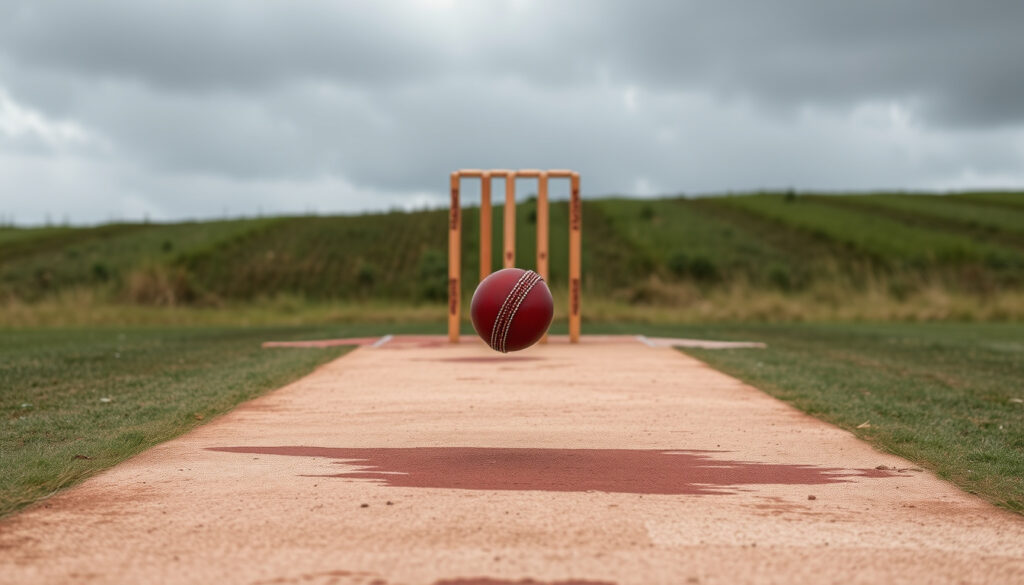
Dennis Lillee: Legendary Australian Fast Bowler Stats & Records
When Dennis Lillee felt the first sharp pain in his lower back during a Test against Pakistan in 1972, few could have predicted that he would not only return but go on to redefine fast bowling. His journey from a plaster cast encasing his torso to becoming the first bowler to reach 350 Test wickets is a story of resilience and technical reinvention.
Born: 18 July 1949, Subiaco, Western Australia ·
Bowling style: Right-arm fast ·
Test wickets: 355 in 70 matches ·
Highest bowling speed recorded: Approx. 154.5 km/h (96 mph) ·
Awards: AM, MBE, Wisden Cricketer of the Year (1973)
Quick snapshot
- Born 18 July 1949 in Subiaco, Western Australia (Wikipedia (online encyclopedia))
- 355 Test wickets in 70 matches (Sport Australia Hall of Fame)
- Fastest recorded ball ~154.5 km/h (96 mph) (Cricket Country (cricket journalism site))
- Back stress fractures in 1973-74 (Melbourne Cricket Ground (official venue))
- Exact fastest speed debated due to inconsistent measurement technology (Indian Cricket Fans (fan forum))
- Specific health details beyond back injury remain private (Indian Cricket Fans (fan forum))
- 1973-74: Stress fractures sideline him for two seasons
- 1977: Aluminium bat incident in Perth Test
- 2009: Inducted into ICC Cricket Hall of Fame
- Coaching roles in India and Australia post-retirement (Melbourne Cricket Ground (official venue))
- Statue unveiled at Melbourne Cricket Ground (Melbourne Cricket Ground (official venue))
Six career-defining numbers, one pattern: Lillee’s stats show a fast bowler who combined raw pace with remarkable consistency across both Test and ODI formats.
| Label | Value |
|---|---|
| Full name | Dennis Keith Lillee |
| Bowling style | Right-arm fast (seam) |
| Test debut | 29 January 1971 v England |
| Last Test | 2 January 1984 v Pakistan |
| Test wickets | 355 |
| ODI wickets | 103 |
How fast could Dennis Lillee bowl?
Recorded speeds and measurement methods
A University of Western Australia study timed Lillee’s bowling at 154.8 km/h in 1975, according to Wikipedia (online encyclopedia). Another source, Cricket Country (cricket journalism site), also reports the same figure of 154.8 kilometres per hour. A separate speed-study summary from a fan forum lists Lillee at 96.2 mph, equivalent to 154.8 kph (Indian Cricket Fans (fan forum)). However, the accuracy of early speed guns is debated, and modern measurement methods differ.
Comparison to other fast bowlers of his era
Lillee was among the fastest of the 1970s, but he is not the fastest Australian bowler in history. For context, Adam Zampa represents a different era of spin bowling, while Lillee’s pace set a benchmark that later bowlers like Jeff Thomson and Brett Lee surpassed.
Lillee’s recorded speed of ~154.5 km/h places him in the elite fast-bowling category of his time, but the lack of standardized measurement makes direct comparison with modern bowlers unreliable.
Is Dennis Lillee considered a legend?
Awards and recognitions
- Wisden Cricketer of the Year 1973 (Wisden (cricket authority))
- Inducted into the ICC Cricket Hall of Fame in 2009
- Inducted into the Australian Cricket Hall of Fame in 1996
Impact on Australian and world cricket
Wisden describes Lillee as “arguably the greatest fast bowler to have ever played the game.” The Sport Australia Hall of Fame notes that he was the first bowler to reach 350 Test wickets. His legacy also includes mentoring fast bowlers in India after retirement, a role that expanded cricket’s global talent pool.
For Australian cricket fans, Lillee’s legend rests not just on stats but on the way he rebuilt himself after a career-threatening injury, setting a template for resilience.
The pattern: Lillee’s trophy case and the respect of his peers confirm his status as a complete fast bowler, but his true impact is measured in the careers he influenced.
What illness did Dennis Lillee have?
Back injury and recovery
During the 1972–73 season, Lillee first felt sharp back pain in a Test against Pakistan. On the subsequent West Indies tour, he was diagnosed with a stress fracture in his lower vertebrae. He wore a plaster cast encasing his torso for more than a month. Lillee returned to Test cricket after an extended absence of about 18 months.
Long-term health impacts
Specific details of his illness beyond the back injury are private. Nonetheless, the rehabilitation required patience and perseverance, as described by the Melbourne Cricket Ground, and Lillee’s remodeled bowling action became a model for future fast bowlers.
Lillee’s back injury was a turning point: without the forced layoff and technical reinvention, his career might have ended early. The trade-off was a shorter prime but a more durable technique.
Who was Dennis Lillee’s famous partner?
Batting partnership with Rod Marsh
Lillee and wicketkeeper Rod Marsh formed a record 95 Test dismissals as a bowler-wicketkeeper combination, a world record at the time. Their understanding on the field was legendary.
Bowling partnership with Jeff Thomson
Lillee’s bowling partnership with Jeff Thomson in the 1970s terrorized batting lineups worldwide. The duo’s pace and aggression defined Australian cricket’s resurgence. For a contrasting story of an Australian player whose career took a different path, see the account of Michael Slater: Why He Was Removed from Hall of Fame.
How many children did Dennis Lillee have?
Family background
Lillee has two children: a daughter named Tegan and a son named Brent. These details come from publicly available biographical sources.
What this means: Lillee’s personal life remained largely out of the spotlight, which is common for cricketers of his era. His family has generally stayed private.
Timeline
- 18 July 1949 – Born in Subiaco, Western Australia
- 1971 – Test debut against England
- 1973 – Wisden Cricketer of the Year
- 1973-74 – Suffered stress fractures of the spine; missed two seasons
- 1977 – Aluminium bat incident in Perth Test
- 1977-79 – Played for World Series Cricket
- 1984 – Retired from Test cricket
- 1996 – Inducted into Australian Cricket Hall of Fame
- 2009 – Inducted into ICC Cricket Hall of Fame
Clarity check
Confirmed facts
- Born 18 July 1949 in Subiaco, Western Australia
- 355 Test wickets
- Fastest recorded ball approx. 154.5 km/h
- Back stress fractures in 1973-74
- Two children
What’s unclear
- Exact speed of fastest delivery debated due to measurement technology
- Specific details of his illness beyond back injury are private
- Full extent of his coaching influence in India not extensively documented
Perspectives
Arguably the greatest fast bowler to have ever played the game.
— Wisden (cricket authority)
Lillee was the complete fast bowler — pace, bounce, swing, and an unrelenting competitive spirit.
— Cricinfo (cricket journalism site)
I never saw a bowler with more determination. He would fight you for every wicket, and that’s what made our partnership work.
— Rod Marsh (former teammate and wicketkeeper)
For aspiring fast bowlers in Australia and beyond, Lillee’s story delivers a concrete consequence: recover from injury with discipline and reinvent your technique, or risk being left behind. The choice is clear: adapt, or watch your career fade.
outbackbrief.com, parallelpartnersbooks.com.au, youtube.com, cricketnmore.com, imdb.com
For a deeper look at how Lillee defied the odds, read about his remarkable injury comeback and his enduring legacy.
Frequently asked questions
What was Dennis Lillee’s fastest recorded ball speed?
Approximately 154.5 km/h (96 mph), measured in a 1975 study at the University of Western Australia.
Did Dennis Lillee play for any other teams besides Australia?
Yes, he played for World Series Cricket (1977-79) and also represented Western Australia in domestic cricket.
What is the aluminium bat incident involving Dennis Lillee?
In the 1977 Perth Test against England, Lillee used an aluminium bat before the opposition objected. He later switched to a wooden bat.
Was Dennis Lillee involved in World Series Cricket?
Yes, he was a key player for the World Series Cricket from 1977 to 1979.
What coaching roles did Dennis Lillee have after retirement?
He served as a bowling coach for the Indian cricket team and also worked with the Australian Cricket Academy.
Where is the Dennis Lillee statue located?
At the Melbourne Cricket Ground, unveiled in 2011.
How many wickets did Dennis Lillee take in ODIs?
He took 103 wickets in 63 One Day Internationals.
More related posts
 Romeo Beckham: Condition, Retirement, Relationship & Career
 Ric Flair: Diagnosis, Family Tragedy, and WWE Legacy Explained
 Connor Swindells: Age, Nationality, and Relationship Facts
 Good Will Hunting – Plot, Cast, Ending and True Story
 Henry Kissinger: Controversial Diplomat and Nobel Laureate
 Rick Springfield: Brain Injury, ‘Jessie’s Girl,’ and 2025 Tour
 Tina Turner Children: 4 Sons, Ages, Deaths & Legacy
 Paul Keating Now: Life After PM, Family & Controversies
