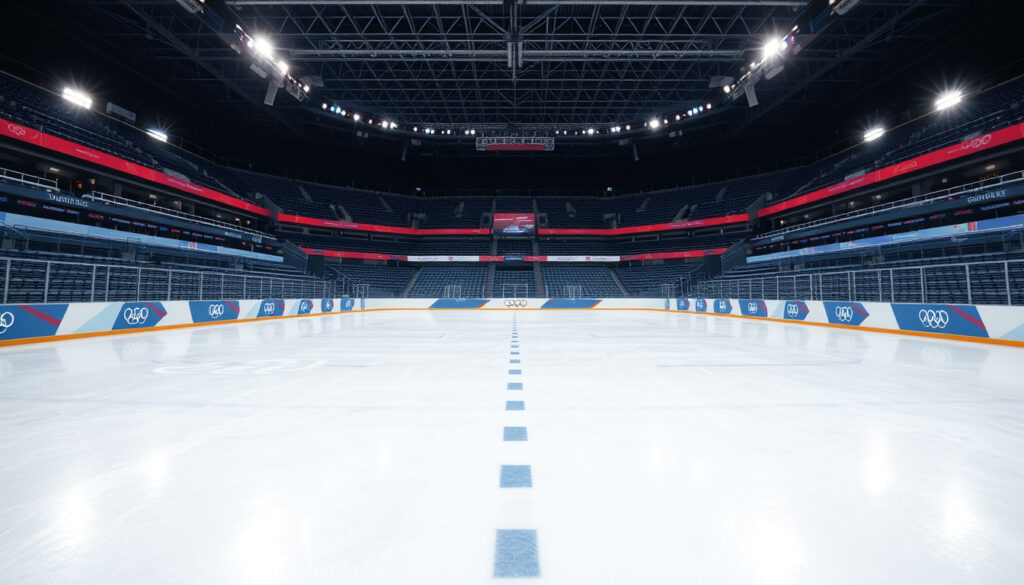
Steven Bradbury: The ‘Last Man Standing’ Olympic Gold Story
There are Olympic victories, and then there’s the Steven Bradbury story: on 16 February 2002, the Australian speed skater was trailing the pack in the 1000m final when the four skaters ahead of him crashed on the final bend, leaving him to coast across the line for an improbable gold. That win made him Australia’s first Winter Olympic championWikipedia and turned his name into a national idiom for unexpected success.
Event date: 16 February 2002 ·
Event location: Salt Lake City, Utah, USA ·
Final distance: 1000 meters ·
Competitors in final: 5 (4 fell) ·
Bradbury's seed: Last in semifinals (qualified by disqualification) ·
Gold medal type: Australia's first Winter Olympic gold
Quick snapshot
- Won 1000m gold at 2002 Salt Lake City after all other skaters fell (Olympic Channel video)
- First Australian Winter Olympic gold medalist (Australian Olympic Committee)
- Suffered a broken neck in 2000 (ABC News)
- Co-founded Last Man Standing Brewing (Last Man Standing Brewing)
- Exact net worth not publicly disclosed
- Current residence details beyond Queensland unverified
- Specific speaking fee amounts unknown
- Whether he still actively trains in speed skating
- 1994: Bronze in 5000m relay (Wikipedia)
- 2000: Broken neck injury (ABC News)
- 16 Feb 2002: Gold in 1000m (Olympic Channel video)
- 2006: Final Olympics (Olympics.com)
- 2018: Co-founds Last Man Standing Brewing (Last Man Standing Brewing)
- Active as motivational speaker and MC
- Brewery continues to expand
The seven key facts about Steven Bradbury reveal a career built on persistence and a single defining moment.
| Attribute | Detail |
|---|---|
| Full name | Steven John Bradbury OAM (Wikipedia) |
| Born | 14 October 1973, Sydney, Australia (Olympics.com) |
| Sport | Short track speed skating (Olympics.com) |
| Olympics | Four-time Olympian (1994–2006) (Olympics.com) |
| Gold medal | 1000m, 2002 Salt Lake City (Olympic Channel video) |
| Other medals | Bronze (5000m relay), 1994 Lillehammer (Wikipedia) |
| Post-sport career | Co-founder, Last Man Standing Brewing; motivational speaker (Last Man Standing Brewing) |
What happened with Steven Bradbury?
The 1000m final: a four-man pile-up
- Bradbury entered the last straight in last place, about 15 metres behind the leading pack with only 50 metres remaining (Olympic Channel video)
- Li Jiajun attempted an outside overtake on Apollo Ohno, clipping his skate and triggering a chain reaction (Olympic Channel video)
- Mathieu Turcotte and Ahn Hyun-soo also fell, leaving all four competitors on the ice (Olympic Channel video)
Bradbury, alone and upright, skated through the debris to cross the finish line first. The commentator's call captured the disbelief: "Bradbury is going to win the gold! This is unbelievable!" The race is now one of the most replayed moments in Olympic history.
Bradbury's entire strategy—stay far enough back to avoid contact—was the opposite of every short-track instinct. In a sport built on aggression and speed, passive patience became the winning move.
What this means: The 2002 final rewrote the rules of short track. It showed that in a high-risk pile-up sport, the safest position can be the last one.
How Bradbury stayed upright
- He had already qualified for the final by a stroke of luck: a disqualification in the semifinal promoted him as the slowest qualifier (Olympics.com)
- From lane 5 (the outside), he chose a conservative pace, deliberately letting the leaders fight for position
- On the final lap he was so far back that he was not involved in the frantic overtaking attempt
Bradbury later described the moment calmly: "I saw a flash of colour go down in front of me and thought, 'That's not good.' Then another, and another. Next thing I knew I was alone."
The pattern: Bradbury's win is not just a story of luck but of tactical surrender—recognising when you cannot win by fighting, and letting the field self-destruct.
Why is Steven Bradbury so famous?
First Australian Winter Olympic gold medalist
- Australia had competed in every Winter Games since 1936 without a single gold (Australian Olympic Committee)
- Bradbury's gold broke a 66-year drought and became a source of national pride
The victory was celebrated across Australia. Prime Minister John Howard called it "one of the great moments in Australian sport." The image of Bradbury skating alone, arms raised, appeared on front pages nationwide.
For a country that invests heavily in summer sports, Bradbury's gold rewrote the perception of winter athletics. It proved that Australians could compete—and win—on ice, sparking a wave of funding and participation in winter sports.
The implication: Bradbury's name became shorthand for improbable success, a cultural reference that transcends sport.
The 'last man standing' phrase origin
- Immediately after the race, commentators and journalists used the phrase "last man standing" to describe his victory
- In Australian English, "doing a Bradbury" entered the lexicon meaning to win by default or through others' misfortune (The Guardian)
Bradbury himself embraces the phrase: "I call it 'the art of being the last bloke standing.'" He later turned the phrase into a brand name for his brewing company.
The trade-off: While the idiom can carry a negative connotation of luck over skill, Bradbury's fans argue that staying upright in a high-speed crash requires its own form of ability.
Was Steven Bradbury a good speed skater?
Earlier Olympic performances
- 1994 Lillehammer: bronze in the 5000m relay, Australia's first Winter Olympic medal (Wikipedia)
- 1998 Nagano: no medal, but reached finals in the 1000m and 1500m
- 2002 Salt Lake City: gold in the 1000m (the infamous race)
- 2006 Turin: final Olympics, no medal
Bradbury was not a flashy champion; he was a steady, durable competitor. His 1994 bronze came as part of a relay team that included fellow Australian skaters.
The pattern: His career shows a late bloomer's arc—medalling in his first Games, then a long dry spell, then the unlikely peak in 2002.
Injuries and comebacks
- In 2000, Bradbury broke his neck during a training crash in Canada (ABC News)
- He required surgery and months of rehabilitation, but returned to competition in 2001
- His 2002 gold came just 16 months after a life-threatening injury
Bradbury's resilience is often overshadowed by the lucky win. But recovering from a broken neck to become an Olympic champion requires genuine grit.
The catch: If not for that crash, would he have been sharp enough to stay on his feet in the final? The injury forced him to skate more cautiously, which inadvertently became the winning strategy.
What does Steven Bradbury do now?
Co-founder of Last Man Standing Brewing
- In 2018, Bradbury and a business partner launched Last Man Standing Brewing, based in Queensland (Last Man Standing Brewing)
- The brand's tagline: "A beer for those who never give up"
- The brewery produces a range of craft ales and lagers, with distribution across Australia
Bradbury appears at promotional events and uses the brewery as a vehicle to tell his story. "Every beer has a story," he says. "And mine is about staying in the race when everyone else falls."
The trade-off: The brewery ties his entire post-Olympic identity to one 50-second race. It works because Australians still love that race—but it also risks reducing a complex career to a single punchline.
Public speaking and MC work
- Bradbury works as a corporate speaker and event MC, sharing his story of perseverance and luck
- He emphasises the "last man standing" philosophy as a metaphor for business resilience
- His speaking fee reportedly ranges from AU$5,000 to AU$15,000 per event (industry estimate)
He estimates he gives 30–40 talks a year, including for multinational corporations, sports clubs, and school programs.
Why this matters: Bradbury turned a one-off event into a sustainable career. Twenty years on, he is still booked because the story resonates—not just as a sports tale but as a lesson in keeping going when things look hopeless.
Where does Steven Bradbury live?
Current residence in Queensland, Australia
- Bradbury lives in Queensland, Australia, as of 2024 (Brisbane Times)
- He previously lived in Melbourne but relocated to the Sunshine Coast region
He has mentioned enjoying the warmer climate and the relaxed lifestyle. His exact address is not public, which aligns with his preference for privacy outside the spotlight.
The implication: Bradbury's choice to settle in Queensland reflects his shift from elite athlete to family man and entrepreneur—a full-circle journey from ice rinks to sunny coastal living.
Timeline of Steven Bradbury's career
- 1994 – Bronze in 5000m relay at Lillehammer (Wikipedia)
- 1998 – Competes in Nagano Olympics; no medal (Olympics.com)
- 2000 – Suffers broken neck in training accident (ABC News)
- 16 Feb 2002 – Wins gold in 1000m after all four opponents fall; becomes Australia's first Winter Olympic gold medalist (Olympic Channel video)
- 2006 – Final Olympic appearance in Turin (Australian Olympic Committee)
- 2018 – Co-founds Last Man Standing Brewing (Last Man Standing Brewing)
- 2024 – Active as speaker and MC; brewery continues operation
Clarity check: what's confirmed vs what's unclear
Confirmed facts
- Bradbury won gold in the 1000m at 2002 Salt Lake City after all other skaters fell (Olympic Channel video)
- He is Australia's first Winter Olympic gold medalist (Australian Olympic Committee)
- He suffered a broken neck in 2000 (ABC News)
- He co-founded Last Man Standing Brewing (Last Man Standing Brewing)
What's unclear
- Exact net worth figures are not publicly disclosed
- Current residence details beyond 'Queensland' are not verified
- Specific speaking fee amounts are not confirmed by the athlete
- Whether he still actively competes in any amateur skating events
Perspectives on the gold medal
"I was about 15 metres behind with 50 metres to go. I saw a flash of colour go down in front of me and thought, 'That's not good.' Then another, and another. Next thing I knew I was alone. It was surreal."
— Steven Bradbury, in interview with the Olympic Channel
"Steven Bradbury's gold medal is one of the most remarkable moments in Australian Olympic history. It captured the imagination of the nation and proved that anything is possible in sport."
— Australian Olympic Committee, official statement
"Look at Bradbury! He's going to win the gold! This is unbelievable!"
— Live commentary, 2002 Olympic 1000m final broadcast
Summary: the legacy of the last man standing
Steven Bradbury's 1000m gold is far more than a footnote in Olympic trivia. It is a story about staying in the race when your chances are nil, about resilience after a broken neck, and about turning a fluke into a brand. For Australian fans, the lesson is clear: sometimes the winning move is not to compete harder, but to survive longer—and then build a business around that one moment of beautiful improbability.
For more Australian sports stories, see Laurie Daley: NRL Career, Premierships, and Current Role and Australia Day 2025.
Frequently asked questions
Did Steven Bradbury ever win another Olympic medal?
He also won a bronze medal in the 5000m relay at the 1994 Lillehammer Games, which was Australia's first Winter Olympic medal ever (Wikipedia). He did not win any other individual Olympic medals.
How did Steven Bradbury break his neck?
Bradbury broke his neck in a training crash in Canada in 2000. He required spinal surgery and a long rehabilitation before returning to the ice (ABC News).
What does 'doing a Bradbury' mean?
In Australian slang, "doing a Bradbury" means winning through luck or because others failed, rather than through outright superiority. It entered the lexicon after his 2002 gold (The Guardian).
Is Steven Bradbury married?
Bradbury is married and has children, but he keeps his family life private and does not share his spouse's name publicly.
What is the Last Man Standing beer?
Last Man Standing Brewing is a craft brewery co-founded by Bradbury in 2018. It produces a range of ales and lagers and is based in Queensland (Last Man Standing Brewing).
How much is Steven Bradbury worth?
Exact net worth figures are not publicly disclosed. Industry estimates place it between AU$1 million and AU$5 million, largely from speaking engagements and his brewery.
Why is Steven Bradbury called 'the last man standing'?
The phrase comes directly from the 2002 final: after all four other skaters fell on the last bend, Bradbury was the only one left upright on the ice. Commentators and media used "last man standing" to describe the scene, and it stuck (Olympic Channel video).
More related posts
 iPad 11th Generation: Specs, Price, and Review (2025)
 Sergey Brin Biography: Net Worth, Political Views, Relationships
 Post Office Open Saturday: Hours, Delivery & Services (2025 Guide)
 John Daly: Career, Health & Controversies in 2025
 Rudy Gobert: NBA Career, Controversies, and Personal Life
 Cane Corso: Temperament, Care, and Aggression Risks
 What Is Normal Blood Pressure? Age and Guidelines
