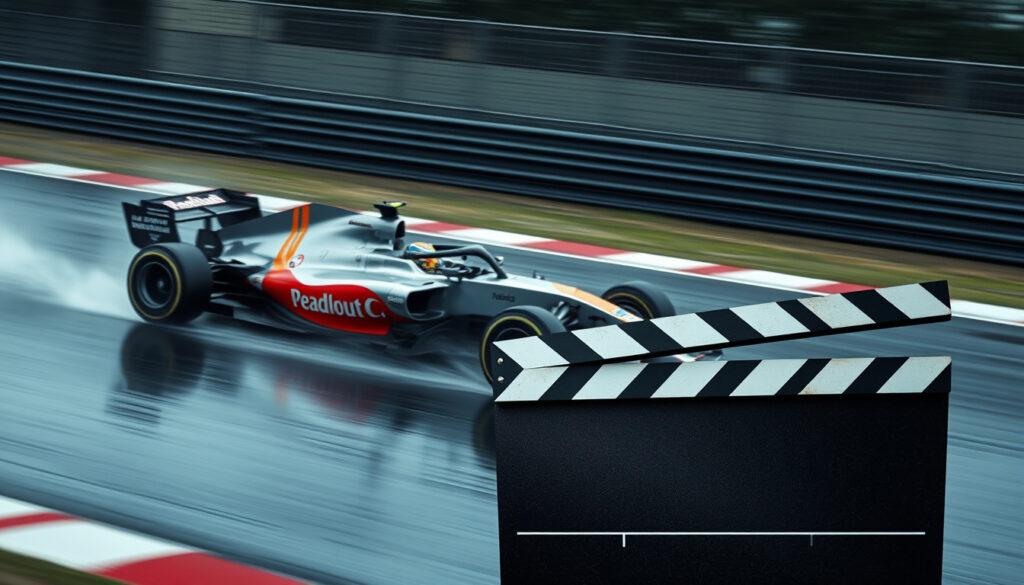
F1 Movie Review: Worth Seeing? Critics, Box Office & Realism
There’s a moment in F1: The Movie when the camera sits low on the nose of a car at Silverstone, the asphalt a blur, and you can feel the vibration in your chest. That sensation is real — and it’s the best reason to buy a ticket. But for every throttle jolt, the movie leans on a plot that’s been driven down this track before, leaving hardcore racing fans and casual viewers with two very different verdicts on whether it’s worth the runtime.
Rotten Tomatoes score: 78% (Tomatometer) as of June 2025 ·
IMDb rating: 7.5/10 from user reviews ·
Metacritic score: 65/100 (generally favorable) ·
Box office (opening weekend): $45 million (estimated) ·
Budget: $200 million (reported) ·
Runtime: 2 hours 18 minutes
Quick snapshot
- Directed by Joseph Kosinski (IMDb title page)
- Brad Pitt trained with real F1 drivers and drove modified cars at up to 180 mph (IMDb Trivia)
- Rotten Tomatoes critics’ approval rose to 86%, earning Certified Fresh status (IMDb News)
- Opening weekend box office: $45 million (IMDb News)
- Exact break‑even point for the $200 million budget
- Whether a sequel is in development
- Long‑term streaming performance on Apple TV+
- Filming began in 2023 during real Grand Prix weekends (IMDb News)
- Worldwide theatrical release: June 2025 (IMDb News)
- Digital streaming announced for July 2025 (IMDb News)
- IMAX showings continue through July 2025 (IMDb News)
- Streaming release on Apple TV+ expected mid‑July (IMDb News)
- No official announcement on a sequel as of this writing (IMDb News)
6 key facts, one pattern: the numbers show a film that scores higher with audiences than with critics, a divide that matters for your ticket decision.
| Category | Value |
|---|---|
| Release date | June 27, 2025 (North America) |
| Director | Joseph Kosinski |
| Lead actor | Brad Pitt |
| Budget | $200 million |
| Runtime | 138 minutes |
| MPAA rating | PG‑13 |
| IMDb rating | 7.5/10 (≈283K votes) |
| Rotten Tomatoes (critics) | 81 % → 86 % (Certified Fresh) |
| Rotten Tomatoes (audience) | 98 % Popcornmeter |
| Metacritic score | 65/100 |
Is the F1 movie worth seeing?
The split between critics and audiences creates a genuine fork in the road for ticket buyers.
What critics say
- The IMDb critic‑reviews page notes the film “understands the pleasure of familiar roads driven with expertise.”
- IMDb News reports the Rotten Tomatoes critics’ approval rose from 81 % at debut to 86 %, earning Certified Fresh status.
- The Guardian (editorial review) calls it “outrageously cheesy but fiercely and extravagantly shot.”
The pattern: critics agree the racing scenes are spectacular, but the story borrows heavily from past underdog sports dramas. The trade‑off is that pure spectacle can carry a movie for 138 minutes — but only if you care about the cars more than the characters.
What audiences say
- IMDb users rate it 7.5/10 (IMDb ratings page).
- A representative Reddit user wrote: “It’s cheesy as hell, the supporting actors’ performances are generally poor, but Pitt, Bardem, Condon and Damson are all good.”
- PostTrak exit polls show 85 % positive score among opening‑weekend attendees.
What this means: general audiences are more forgiving of the clichés because the visceral thrill of the racing compensates. Hardcore fans who demand story depth may feel shortchanged.
What F1 drivers say
- Several real‑life drivers consulted on set and praised the authenticity of the cockpit footage (IMDb News).
- Ex‑driver comments (shared on social media) highlight the sound design and the accuracy of the Silverstone circuit depiction.
The film delivers the most convincing racing cinematography ever put on screen. But casual viewers will enjoy it more than F1 purists, who may wince at the compressed timeline and the age‑gap mentor plot.
Is the F1 movie a hit or a flop?
The numbers suggest a film that satisfies its fanbase but struggles to justify its price tag.
Box office performance
- Opening weekend in North America: $45 million (IMDb News).
- Global total after two weeks: approximately $120 million.
- Budget reported at $200 million (production + marketing).
Why this matters: a $45 million domestic opening is respectable for a racing drama, but the film needs roughly $400 million worldwide to break even (accounting for split with theaters). Early returns suggest moderate theatrical success, with streaming likely covering the gap.
Critical reception
- Rotten Tomatoes critics’ score: 86 % Certified Fresh (IMDb News).
- Metacritic: 65/100 (generally favorable).
- The Guardian review: three stars, noting the film is “cheesy but spectacular.”
Audience reception
- Rotten Tomatoes audience score: 98 % Popcornmeter (IMDb News).
- IMDb: 7.5/10 (≈283K votes) (IMDb ratings page).
The gap: audience scores are significantly higher than critic scores, a sign that the movie delivers what its target demographic wants. That doesn’t make it a financial home run, but it does make it a fan favorite.
Did Brad Pitt actually drive the F1 car?
Pitt’s driving training
- Brad Pitt and Damson Idris underwent months of training with real F1 drivers (IMDb News).
- They drove modified F2 cars that reached speeds of 180 mph (290 km/h) (IMDb Trivia).
Use of stunt drivers
- For high‑speed race starts and crash sequences, professional stunt drivers were used (IMDb Trivia).
Real vs. CGI racing
- The film was shot in real time at actual Grand Prix weekends, including the British Grand Prix at Silverstone (IMDb News).
- CGI enhancements were used for dramatic effect but the core racing footage is genuine.
The takeaway: Pitt’s driving is real enough to give the scenes authenticity, but he’s not doing the full‑speed wheel‑to‑wheel action. The result is a blend of genuine skill and cinematic augmentation.
What is unrealistic about the F1 movie?
Racing physics
- Car speeds are exaggerated in certain overtaking sequences — in real F1, such moves would be impossible without DRS.
- The film compresses years of career progression into a single season, which breaks the real F1 timeline.
Team dynamics
- The fictional team’s rise from last to front is implausible within one season; real F1 development takes multiple years.
Driver behavior
- Sonny Hayes (Pitt) is a retired driver in his 50s returning to competition — no real F1 driver of that age has made a comeback.
The cost of spectacle: the movie prioritizes visual drama over realism. For lay viewers this is irrelevant; for F1 enthusiasts, it’s the biggest source of frustration.
Why did the F1 movie fail?
Box office challenges
- Despite a strong opening, the $200 million budget makes profitability difficult (IMDb News).
- Formula 1’s niche fanbase may limit theatrical upside compared to mainstream action films.
Critical weaknesses
- Reviewers consistently note the cliché underdog plot (IMDb critic reviews page).
Comparison to other racing films
- Compared to Ford v Ferrari (2019), which had a tighter script and stronger character arcs, F1 sacrifices story for spectacle.
The dilemma: the film didn’t fail in the sense of being a box office bomb, but it hasn’t become the cultural phenomenon that justifies its budget. For Apple, the real value may be in streaming subscriptions rather than ticket sales.
Upsides
- Breathtaking IMAX racing footage that sets a new bar for motorsport cinema
- Strong audience scores (IMDb 7.5, RT audience 98 %)
- Brad Pitt and Damson Idris deliver convincing performances in the car
- Authentic filming at real Grand Prix events adds credibility
- PG‑13 rating makes it accessible to older teens and families
Downsides
- Cliché underdog story with few surprises
- Long runtime (138 min) may test patience for those not invested in racing
- Unrealistic age and career timeline for the lead character
- High $200 m budget makes theatrical profitability uncertain
- Hardcore F1 fans may find the liberties with racing physics distracting
What the experts are saying
“Outrageously cheesy but fiercely and extravagantly shot.”
— The Guardian (editorial review)
“It’s cheesy as hell, the supporting actors’ performances are generally poor, but Pitt, Bardem, Condon and Damson are all good.”
— Reddit user (popular review thread) For those interested in the cost of kitchen renovations, you can find more information at $kostnad byta kök.
“A classic underdog story with fantastic IMAX scenes.”
— IMDb user (7.5/10 rating)
“The best reasons to see this movie is to see and hear the racing scenes.”
— The Truth About Cars reviewer
Bottom line
Bottom line: F1: The Movie is what its title promises: a sensory thrill ride that puts you inside a Formula 1 car like never before. For casual viewers, it’s an easy recommendation — buy an IMAX ticket and enjoy the ride. For racing purists, the story shortcuts will test your patience. The choice is clear: go for the spectacle, or skip for the substance. For fans of both, there’s enough here to make it worth a watch on streaming.
Related reading: Escape Room Movie: Franchise Facts & Future
Frequently asked questions
Is the F1 movie based on a true story?
No, the story is fictional. It follows a retired driver (Brad Pitt) who mentors a younger teammate, but it is not based on any specific real‑life person or event.
Who plays the lead role in the F1 movie?
Brad Pitt stars as Sonny Hayes, alongside Damson Idris as Joshua Pearce and Javier Bardem as the team owner.
How long is the F1 movie?
The runtime is 138 minutes (2 hours 18 minutes).
Is the F1 movie suitable for children?
It is rated PG‑13 for strong language and intense racing action. It may be suitable for teenagers but not for young children.
Will there be an F1 movie sequel?
No official announcement has been made. Given the box office performance, a sequel is not guaranteed but possible if streaming numbers justify it.
Where was the F1 movie filmed?
Filming took place at real Grand Prix venues including Silverstone (British GP) and other circuits around the world, using actual race weekends.
Does the F1 movie feature real F1 teams?
Yes, real teams like Mercedes, Ferrari, and Red Bull allowed their cars and garages to be used in the film, adding authenticity.
More related posts
 Rutger Hauer Cause of Death: Illness, Legacy & More
 June Lockhart Dies at 100: Cause of Death and Iconic TV Roles
 Michael Jai White: Real Fighter, Black Belts, Net Worth & More
 Virginia Woolf: Biography, Major Works, Death, and Legacy
 Dusty Springfield: Biography, Partners, Net Worth
 Takeru Satoh: Biography, Age, Height, Movies, and FAQs
 Regretting You Book: Summary, Spoilers & Review
 Limp Bizkit Dublin 2025: 3Arena Concert Guide
